Introduction
It’s difficult to surprise anyone with a custom mobile network operator app (an MNO app for short) in 2021. All the major industry players regularly develop mobile applications and extra digital services, which include everything from messengers to video and music streaming platforms.
The primary function of basic MNO applications is to provide users with an overview of their balance and data plans. But oftentimes these apps have a number of supplementary features that vastly expand their functionality. All of these must be implemented while maintaining – if not improving – the app’s usability.
What’s more, data security threats have been a growing concern across all industries, Telecom being no exception. MNO applications carry lots of responsibility when it comes to information security, connection security, source code security, encryption, loss of integrity and privilege escalation risks.
Moreover, recent MNO service applications are driven by several technological and market-wide developments, including the rollout of 5G Standalone networks, widespread adoption of eSIM, the rise of AI-powered personalization, and the growing popularity of super app ecosystems. As a result, modern MNO apps are now expected to deliver far more than basic account management.
Therefore, we can look at the quality of MNO app development using the three criteria that directly affect user experience: telecom app features, usability, and security. With these, we will explore the current trends in MNO service application development to see what makes for a great MNO service app in 2021.
You can also read our general overview of the telecom industry trends.
Telecom App Features
The omnipresence of social media has caused many customers to shift away from using standalone apps. Switching from one application to another is now seen as a hassle – unless the switch is worth it, that is.
The functionality that your MNO app offers has to be extensive and practical enough to make the user actually want to open it. A rudimentary set of features isn’t enough anymore. But you still need to cover the basics, so let’s start with them.
The Basic Telecom App Features
The main goal of MNO applications is to give users as much control over their data usage as possible. Therefore, giving clients the ability to manage their contracts and do quick network checks directly through the app is absolutely crucial.
An MNO service app must provide the basic tariff and contract information to the user. Clients also need to see the available data volume and the running costs – keeping track of one’s expenses is one of the key appeals of such apps, after all.
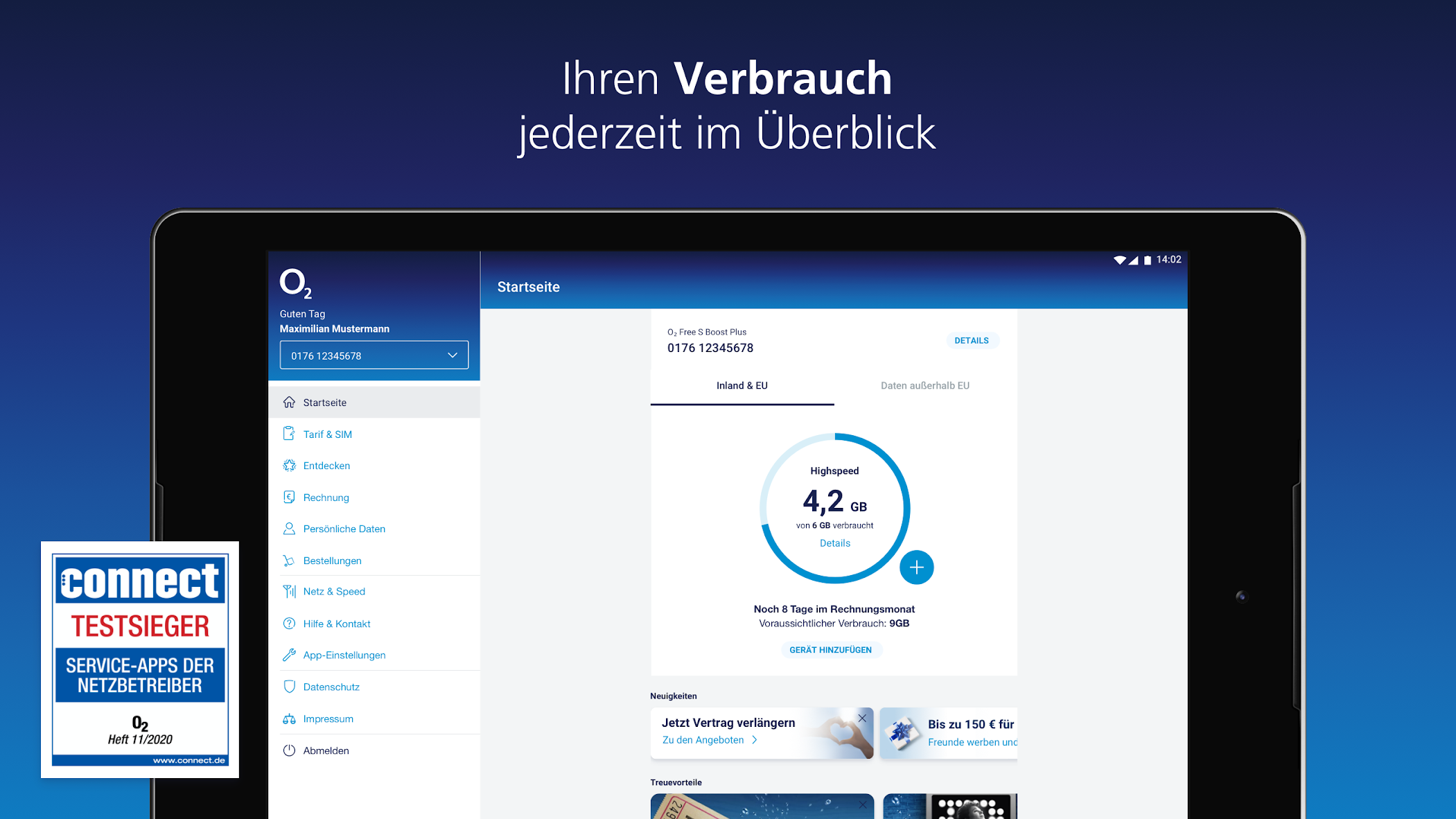
Another must-have feature is displaying the current level of data consumption. Some applications, such as Mein O2, go a step further and show the usage level of the data account both inside and outside the EU, thus giving users a fuller understanding of how much using the service will cost them in different locations.
Payments
All the main interactions with a network provider should be possible through the app alone. This includes paying for said provider’s services and being able to quickly switch between different data plans.
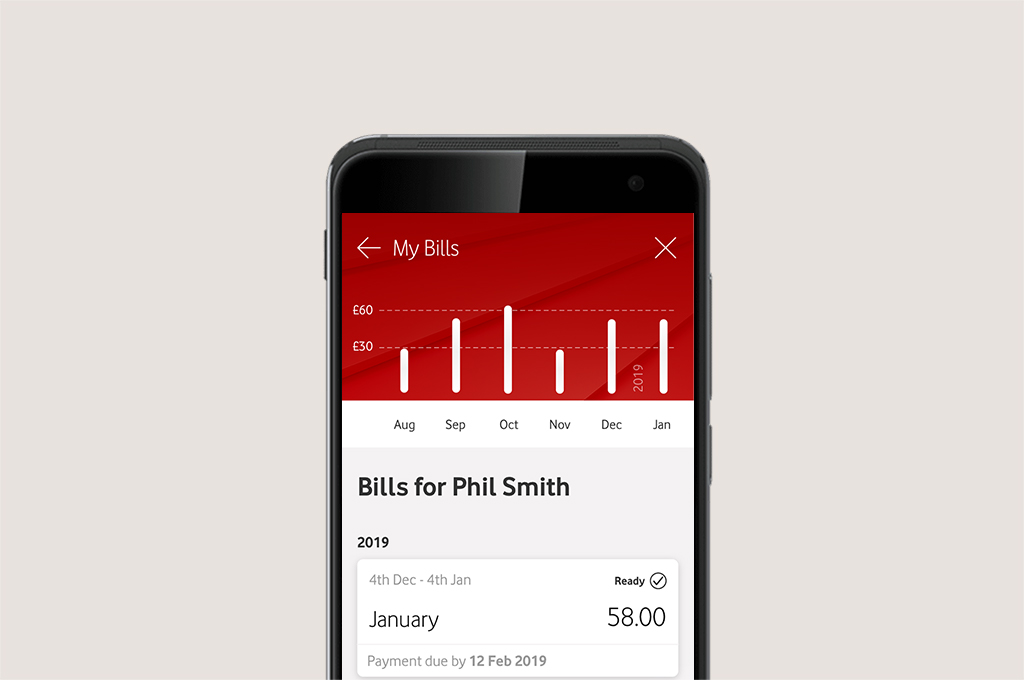
The latter can be further facilitated by adding a section that lists all of the company’s main offers with the ability to compare them. This can work wonders for your sales and help clients discover better options to cover their needs.
The online-only approach to sales has been successful as early as 2012, when the French network provider Free Mobile entered the market with a web-first commercial model. Since its inception, the company has been committed to 100% online sales and highly competitive subscription deals. Over the next four years, they have amassed over 11 million clients.
You may want to introduce several payment methods into your MNO application to improve customer satisfaction. Having the ability to pay directly by credit card is good and all, but having the option to use a roundabout service such as Paypal may be more convenient for some customers.
Predictive Analysis
Predictive analytics can be great for making your customer services more personalized. These analytics can be based on a number of data types:
- General Customer Information – demographic, services used, spending pattern, usage plan, etc.;
- Usage Data – VAS (value-added services), average revenue, mobile Internet usage, etc.;
- Device Data – brand, model, series, device history, etc.;
- Location Data – current location, most visited location, roaming data, etc.
Combining and organizing these insights will allow your company to give the customer more relevant offers based on their behavioural patterns.
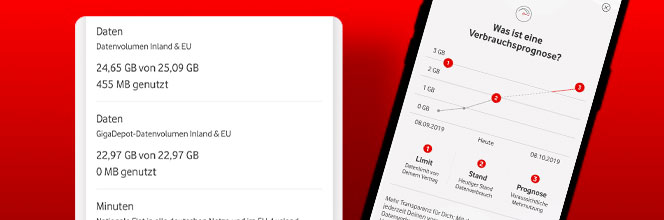
What’s more, customers can receive forecasts on how much data they are likely to use by the end of the month, thus promoting more efficient data consumption – Mein Vodafone is a good example of this feature being applied successfully.
Another way to apply predictive analysis is by using the collected data to customize the app’s support system, be it a chatbot or a voice call script. This will help the company deliver help that targets the customer’s issue with utmost precision.
In recent years, however, predictive analytics has increasingly been augmented by AI-driven and generative AI technologies. Instead of static forecasts, modern MNO apps are now capable of adjusting tariffs in real time and introducing dynamic pricing models.
Besides, Generative AI enables natural-language interactions and voice-driven actions. Customers can request changes conversationally (asking for more data or a temporary roaming package) and have those requests executed instantly.
At the same time, GenAI-powered support agents are becoming sophisticated enough to resolve complex multi-step issues without human intervention.
Login Options
Another notable feature is the app’s login system. It can be a great onboarding tool for new customers and a convenient way to go digital for long-time clients.
New customers can enter the app, choose their service plan, upload a picture of the necessary documents for verification, input their payment information and mailing address, and then track the delivery of their personal SIM card.
Of course, the data has to be automatically encrypted and sent to the network provider’s central databases. But we’ll elaborate more on data security in a later section of this article.
The login process for existing clients must be streamlined, too. All Mein Vodafone users need to log in is a connection to the Vodafone mobile network – and their data is automatically entered into the system as soon as they open the app. It pretty much eliminates the need to go through the procedure of setting up a brand new account.
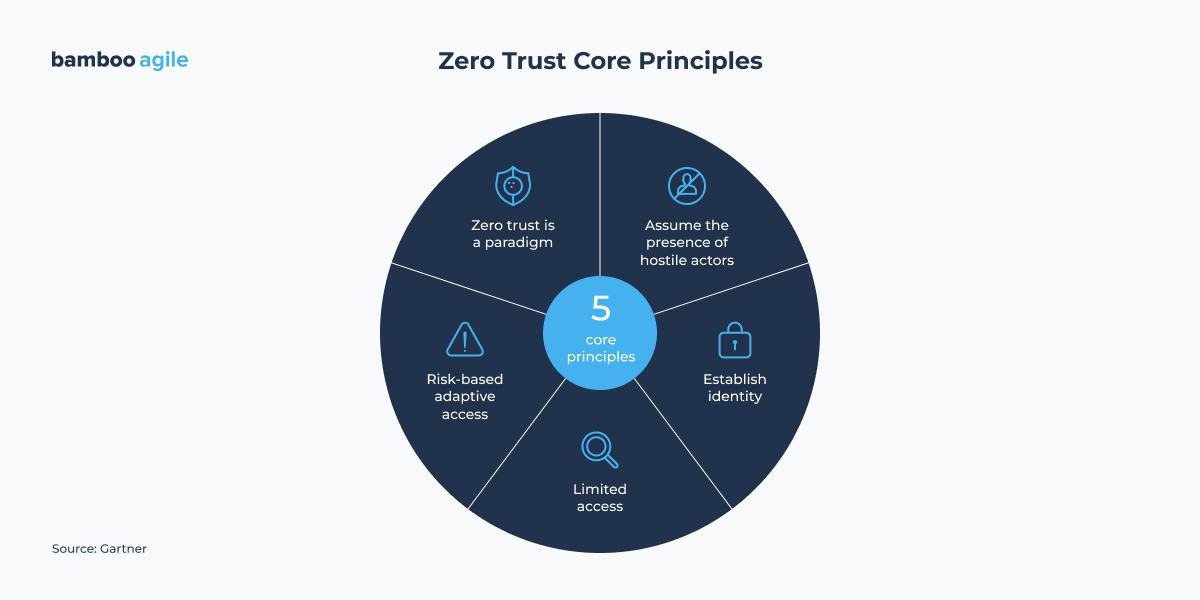
That’s not where quick login possibilities end, however. Considering high security expectations, many modern MNO apps are transitioning towards passwordless authentication, using passkeys, mobile IDs, and national eID or BankID solutions (particularly within the EU). For example, the My Swisscom app allows users to log in via facial recognition or fingerprint. These approaches are closely aligned with Zero Trust Architecture principles, according to which, no access request is trusted by default.
Support
Believe it or not, call centers and chatbots are no longer the ultimate method of providing customer support. Not only do they account for a significant share of the company’s operational expenses, but they have the biggest potential to bring about customer dissatisfaction.
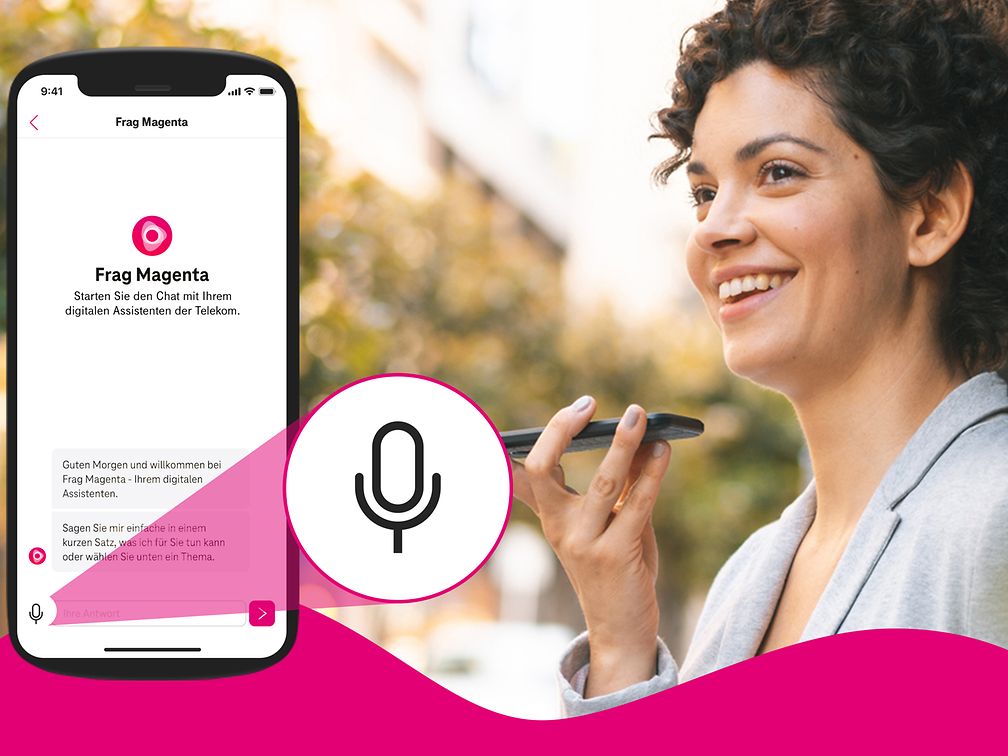
These days customer support is mostly moving toward an omnichannel and AI-first model. Traditional chatbots are being replaced by AI copilots capable of understanding intent, securely accessing customer data, and resolving issues end to end.
In addition, advanced MNO apps already implement predictive ticketing, where network or billing issues are detected and addressed before users reach out. And so-called self-healing network alerts can proactively inform customers about resolved disruptions.
Another universal feature is omnichannel support, which provides a seamless experience across in-app chat, messaging platforms such as WhatsApp or Telegram, and web interfaces.
All this doesn’t mean that you should completely disregard human operators. Sometimes human interaction is simply irreplaceable. Nevertheless, you can significantly reduce their numbers and individual workloads, as well as user wait times by offering different, faster options.
Telecom App Usability
Implementing a lot of telecom app features is one thing, but having all of them work well together is a whole nother one. No user will be happy with an app that’s annoyingly slow, nor will they enjoy a confusing interface.
According to this Ericsson survey, an average smartphone user needs 4.1 days and 2.2 attempts to complete an interaction with a Telecom company. What’s more, a one-day delay in accomplishing an action translates to a 30% decrease in customer satisfaction.
This points to the obvious fact that speed is integral to improving the user experience. We’ve already talked about how one can improve it in terms of the app’s functionality. But let’s see how you can boost the efficiency of the user interactions with your MNO application.
Great Performance
The first thing developers ought to ensure is that their solution runs smoothly on all platforms. The most effective way to do that is by building the mobile app from the ground up for each target OS, thus covering all Android or iOS-specific issues. Similarly, if your application needs an internet connection to function, you have to take extra optimisation measures to reduce load times.
Needless to say, diligent quality assurance is integral. Not just before the initial release – regular maintenance and bugfixes are necessary to keep your app running well no matter the number of users or extra modifications (updates, added features, new integrations, etc.) over the course of its entire lifecycle.
If you want to learn more about quality assurance in production, read this article.
Intuitive UI
The interface has to be easy to use and understand. The most important information is best displayed on the app’s homescreen. This includes the data volume currently available, current data consumption, and running costs.
All the side options (rates, bills, additional contract functions, etc.) must be easily accessible from the homescreen with as few clicks as possible.
Still, usability expectations continue to expand. Modern best practices include such features as accessibility compliance (WCAG 2.2), dark mode support, meaningful microinteractions, personalized dashboards, etc.
There are context-aware interfaces as well. They adapt dynamically depending on whether the user is at home, roaming, or managing multiple accounts.
Needless to say, the overall look of the application has to be clean and to the point – an uncluttered UI is a lot more effective at conveying information and creates a sense of transparency.
Extra Visualization
People are visual creatures, and oftentimes it’s easier to comprehend certain numerical information when it’s reflected in a chart. My Sunrise, for one, uses pie charts to liven up the look of the UI and provide a clear visual representation of where the user’s expenses go.
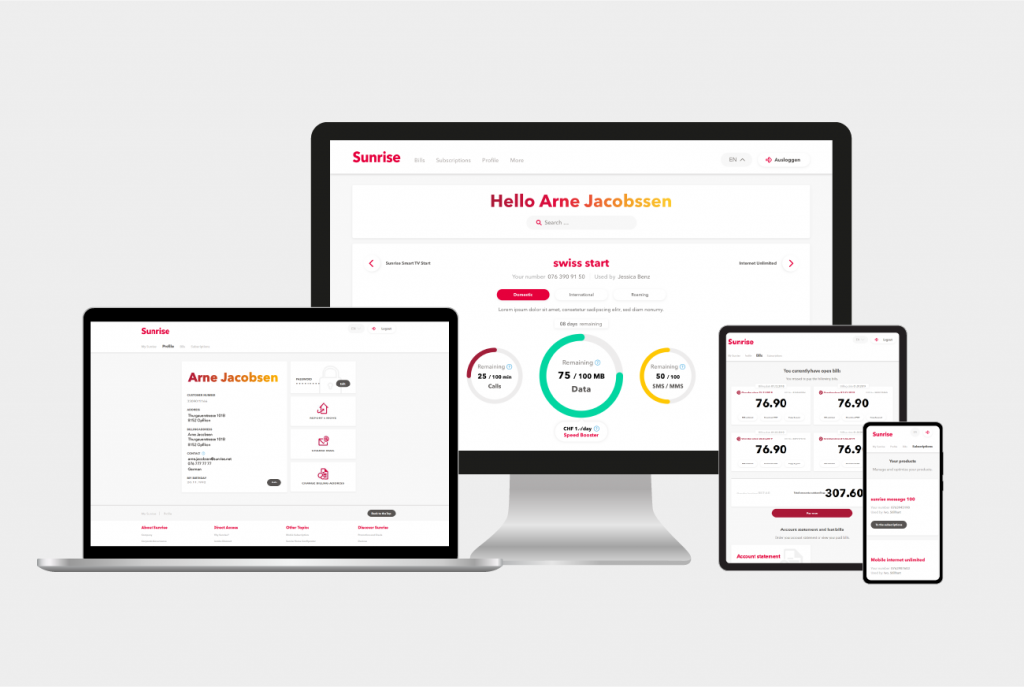
This feature is largely optional, but can be quite effective if implemented correctly. The main thing to look out for is that whatever visuals you decide to add must not compromise the application’s clean aesthetic and usability.
Emerging Features to Consider in 2026
The baseline self-care features of MNO apps are not enough to secure long-term user engagement. Implementation of advanced capabilities reflects broader digital behaviour trends and emerging expectations. Below we have reviewed the features which help align connectivity with lifestyle patterns, commerce, and personalized services.
eSIM Support
Initial forecasts suggested that 90% of operators would offer eSIM by 2025, but in reality adoption has been somewhat slower. Still, by mid-2024, more than 440 operators worldwide supported eSIM, with significant growth driven by travel services and digital-first brands.
With eSIM enabled directly through an MNO app, users can activate service instantly and switch profiles without waiting for physical SIM delivery, greatly reducing churn risk among travellers and tech-savvy segments who appreciate immediacy and control.
Multi-Account and Family Management Features
It is important to keep in mind that many households now manage several subscriptions under one roof. Such apps allow shared data pools, parental controls, centralized billing, increasing the likelihood that the customer will interact with the app regularly rather than sporadically.
Roaming Intelligence
Static roaming plans historically frustrated users with unpredictable costs. Newer apps may provide context-aware guidance, for example, recognizing when a user crosses a border and proactively suggesting cost-effective data packages. This converts a pain point into a moment of value. Therefore, this predictive contextual insight strengthens trust and reduces bill shock, which is a known driver of customer dissatisfaction.
Super Apps
Finally, some operators are introducing models resembling “super applications” in which connectivity is provided along with related digital services, from financial instruments and insurance products to smart home management systems and Internet of Things dashboards.
In Europe, this approach is already visible in practice. Deutsche Telekom’s MeinMagenta has evolved beyond classic account management to include smart home control (Magenta SmartHome), media services, and partner content.
Orange integrates financial services such as Orange Bank in several markets, allowing users to manage mobile services and everyday banking within a single ecosystem.
Vodafone combines connectivity with IoT management, digital security products, and entertainment subscriptions through its My Vodafone app, while Swisscom positions its app as a central hub for telecom, TV, cloud storage, and smart home services.
In practice, operators do not need to build a full-scale super app all at once. It usually makes more sense to start with a few services that clearly fit the core telecom experience and expand step by step, following how customers actually use the app.
Telecom App Security
The recent hacker breach of European Telecom Network has been a wake-up call for the Telecommunications industry. When millions of customers had their personal account data stolen, companies that had previously been certain of their system’s security began to think: are we doing enough?
What Counts as Good Telecom App Security
The security level of an MNO service app can be estimated using 4 categories: data privacy, traffic protection, protection against identity theft, and source code security.
Data Privacy
The first criteria of data privacy is the most important one. It regards how well personal data, such as the user’s login, password, and general information are protected both in the application’s local memory and the smartphone’s external memory. The data used for identification between the app and the server also falls into this category.
The danger here becomes apparent if the app doesn’t delete its identification data after the identification process is finished. If hackers get access to that information, they may exploit it to uniquely identify the user, as well as learn when and how often the person logs into the system. It’s also good to check if any sensitive data can be captured via screenshots and which permissions the app requires to function.
Traffic Protection
The next step is traffic protection. It’s common knowledge that data is the most vulnerable during transmission, which is why this point requires the developers’ utmost attention. Here, encryption is a must.
Keep in mind that even the strongest encryption protocols don’t offer a 100% guarantee during transmission, which is why the application should avoid sending unnecessary data to the server. Naturally, the transmission method itself has to be secure and abide by your local data protection regulations.
Protection Against Identity Theft
Protection against identity theft is partially ensured by restricting the number of user’s rights within the application. Let’s imagine that some attackers managed to authorize as one of the users. If that user had easy access to others’ private data, so will the attackers.
The app also needs to have special mechanisms to prevent its cloning. Otherwise hackers will be able to create a perfect copy of the application, steal all the user data from it, and then use it to log into the real thing.
Source Code Security
Finally, source code security is integral to preventing deep-level attacks on the system. The code’s safety can be maintained if the developers carefully implement third-party components and have the important data be stored in an obfuscated manner.
As per usual, all of this needs to be topped off with closely following the state data protection regulations. This needs to be done not just for the sake of some legal formalities, but for solidifying the foundation of your telecom app security.
Regional Regulatory Context
In fact, security expectations for MNO service apps are inseparable from regulation. This point directly influences architecture, feature design, and user interaction models of the whole app. However, each region has its own specific security requirements.
In the European Union, GDPR and ePrivacy requires respect for user data: collect only what is necessary, be honest and understandable in explanations, and give people real control over their information. For telecom apps, this means that personal offers, analytics, or AI recommendations must be implemented with a clear request for consent and a transparent explanation of why the data is being used and what benefits it provides to the user.
The introduction of NIS2 further raises the bar by classifying telecom operators as critical infrastructure. As a result, regulators now expect evidence of secure development lifecycles, continuous risk management, and incident response readiness. Just strong encryption or access control on paper is not enough.
In the United States, regulation is more fragmented, as it has to combine federal telecom rules with state-level privacy laws. This has pushed many operators toward adopting recognized frameworks like the NIST Cybersecurity Framework as a unifying baseline. In short, this encourages a risk-based approach: sensitive actions such as SIM swaps, identity changes, or payments require stronger authentication and monitoring, while less critical interactions can remain frictionless. Demonstrating “reasonable security measures” is often as important as the measures themselves.
Across Asia-Pacific and emerging markets, regulatory regimes are rapidly maturing. Data sovereignty requirements, mandatory breach notifications, and tighter cybersecurity laws increasingly affect how telecom apps handle user data at scale. In practice, this demands flexible architectures that support regional data localization, strong monitoring capabilities, and disciplined third-party dependency management.
So How Do Modern MNO Apps Fare?
The German company Umlaut carried out a comparative security check of the major MNO service applications in the country using these four categories and the national data security guidelines.
While the results were generally satisfactory, companies tended to score the lowest on the data privacy scale, with Deutsche Telekom getting as low as 53%. On the other hand, protection against identity theft was solid across the board, with Drei and Magenta both scoring 100%.
From that, we can garner that data privacy is the most neglected point of the bunch – and, therefore, the most common vulnerability of MNO service applications. Something you, as a network service provider and developer, should actively prevent.
That also doesn’t mean you can slack off on other fronts. The biggest companies score high in traffic protection, protection against identity theft, and source code security precisely because they invest in constantly improving their practices.
Distribute your priorities carefully, carry out regular security checks, and keep your processes up to date – then, perhaps, you’ll be on your way to building the first MNO app to score a firm 100% across the board!
Conclusion
The network operators of today are expected to deliver their services through a variety of communication channels – and mobile applications are the most recent addition to the roster. These are supposed to be quick, convenient, usable, and secure. The latter point is a bit of a painful topic for many providers, but it’s something everyone can overcome with good practices and diligence.
If you are a network service provider that wants to build a service application from scratch or have an audit of an existing one, consider contacting an experienced telecom app developer. Bamboo Agile has a large portfolio of successful Telecommunication apps, and we’d be happy to share our expertise in a free consultation. Let’s join forces to create outstanding software!