Picking the best mobile app design agency usually comes down to one question: who can you hand this to and trust it’ll come out right? As a founder, you might be trying to stretch a modest budget past the first quote. Or your app might be already live, but it isn’t holding onto users, and no one’s quite sure why.
Trust matters because the decision outlasts the design phase itself. A poorly structured design system shows up as development friction months later, while a rushed research phase may lead to churn after app launch.
It’s also hard to overestimate the importance of quality mobile experience, given the market data that’s been present for years across various studies:
- Nearly 1 in 4 users abandon an app after a single use – a Localytics study cited by TechCrunch found 23% of users never opened an app a second time. This figure has been remarkably stable across the years, since no more recent equivalent-scale study has meaningfully overturned it.
- A well-designed interface can lift conversion rates by up to 200%, and a strong end-to-end UX can push that to 400%, as it’s stated in Forrester Research’s own analysis. Design is directly tied to whether the app makes money.
- Design-driven companies have outperformed the S&P 500 by 200%+ over a 10-year period, per the Design Management Institute’s Design Value Index.
In our list, we look past polished portfolios to companies with verifiable recognition and pricing sourced from verified reviews.
How we evaluated these agencies
Portfolio slickness alone doesn’t predict a good outcome. We weighted four main criteria instead:
- Breadth of industry experience – a mobile app design firm that’s only ever designed fintech apps carries more risk on a healthcare project than one with proven range across sectors;
- Live product quality – how the agency’s shipped apps perform in practice, independent of how their case studies present them;
- Recognition, when present, including Awwwards, Webby Awards, Clutch, and named award-winning products;
- What happens after design handoff – whether the agency’s process supports full-cycle mobile app development, or the services offered are focused more on UX.
If you want the full breakdown of what mobile app development trends look like today, check the recent interview with our CTO.
The 10 mobile application design agencies
Quick comparison of all companies on the list
| Agency | Location | Min. project size | Hourly rate | Services offered |
| Ustwo | London, NYC, Malmö, Lisbon, Tokyo, Sydney | $50,000+ | $150–$199/hr | Design focus |
| Work & Co | Brooklyn, Portland, LA, Atlanta, São Paulo, Copenhagen | Enterprise-tier, not disclosed | Full cycle | |
| Clay | San Francisco | $10,000+ | $150–$199/hr | Design focus |
| Hello Monday | Copenhagen, New York | Enterprise-tier, not disclosed | Design focus | |
| Bamboo Agile | Tallinn, Estonia | $10,000+ | $25–$49/hr | Full cycle |
| Utility | New York, Los Angeles | $100,000+ | $100–$149/hr | Design focus |
| Goji Labs | Los Angeles | $25,000+ | $100–$149/hr | Full cycle |
| Yummygum | Amsterdam | $10,000+ | $100–$149/hr | Design focus |
| UX Studio | Budapest | – | $50–$99/hr | Design focus |
| ScienceSoft | US, GCC, EU (multiple offices) | – | $50–$99/hr | Full cycle |
1. Ustwo
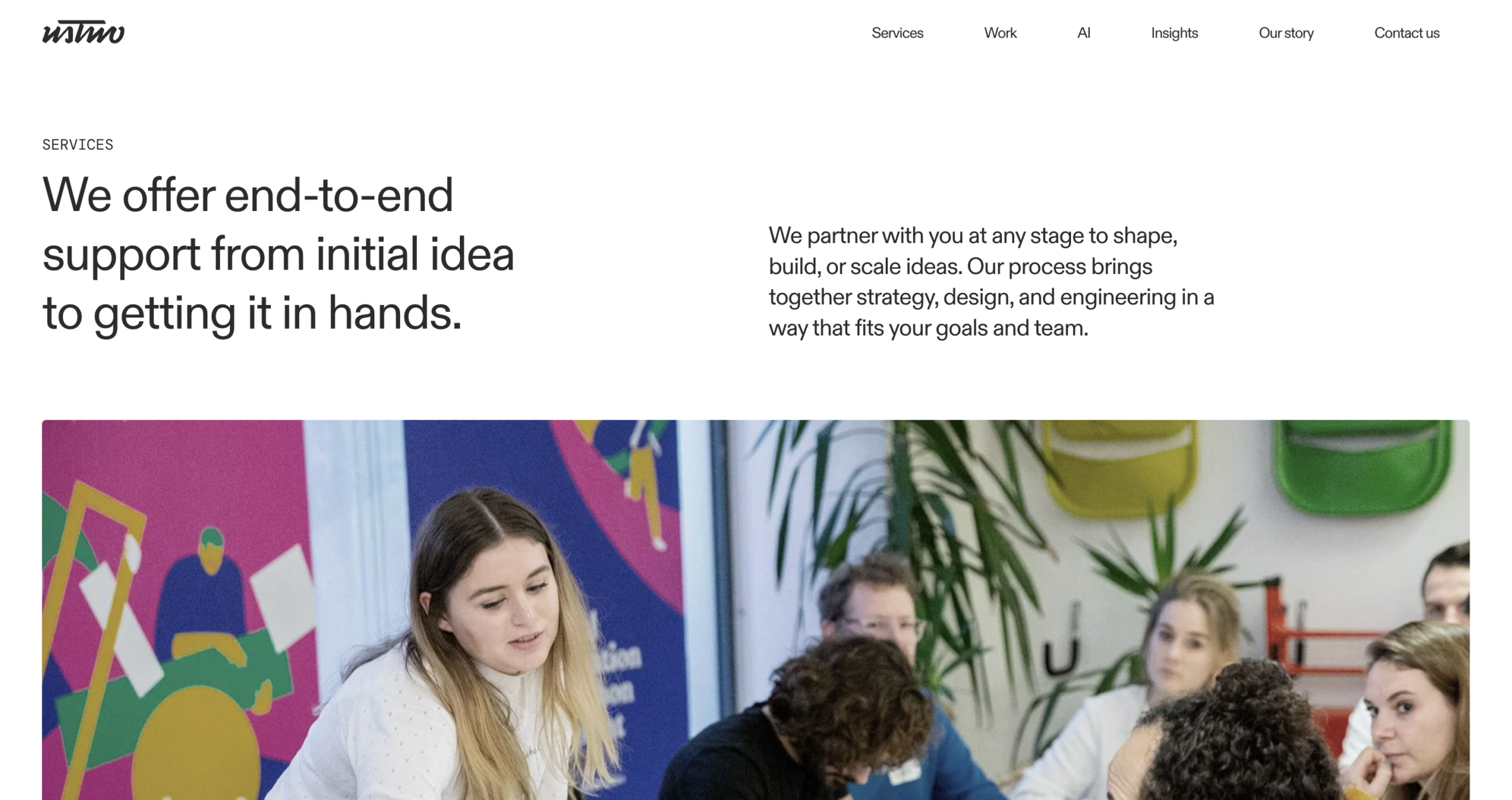
Ustwo is the studio behind Monument Valley – one of the most awarded mobile products ever shipped, and proof this team can combine emotionally engaging interaction design with commercial discipline. Beyond their own projects in gaming, Ustwo does client work for Google, the Malala Fund, and Headspace, with a portfolio that also includes Peloton, L’Oréal’s La Roche-Posay, and HSBC.
The studio has grown from its 2004 London founding into a roughly 250-person team with outposts in New York, Malmö, Lisbon, Tokyo, and Sydney. Indeed, they are a good choice for brands wanting a memorable, talked-about app.
2. Work & Co
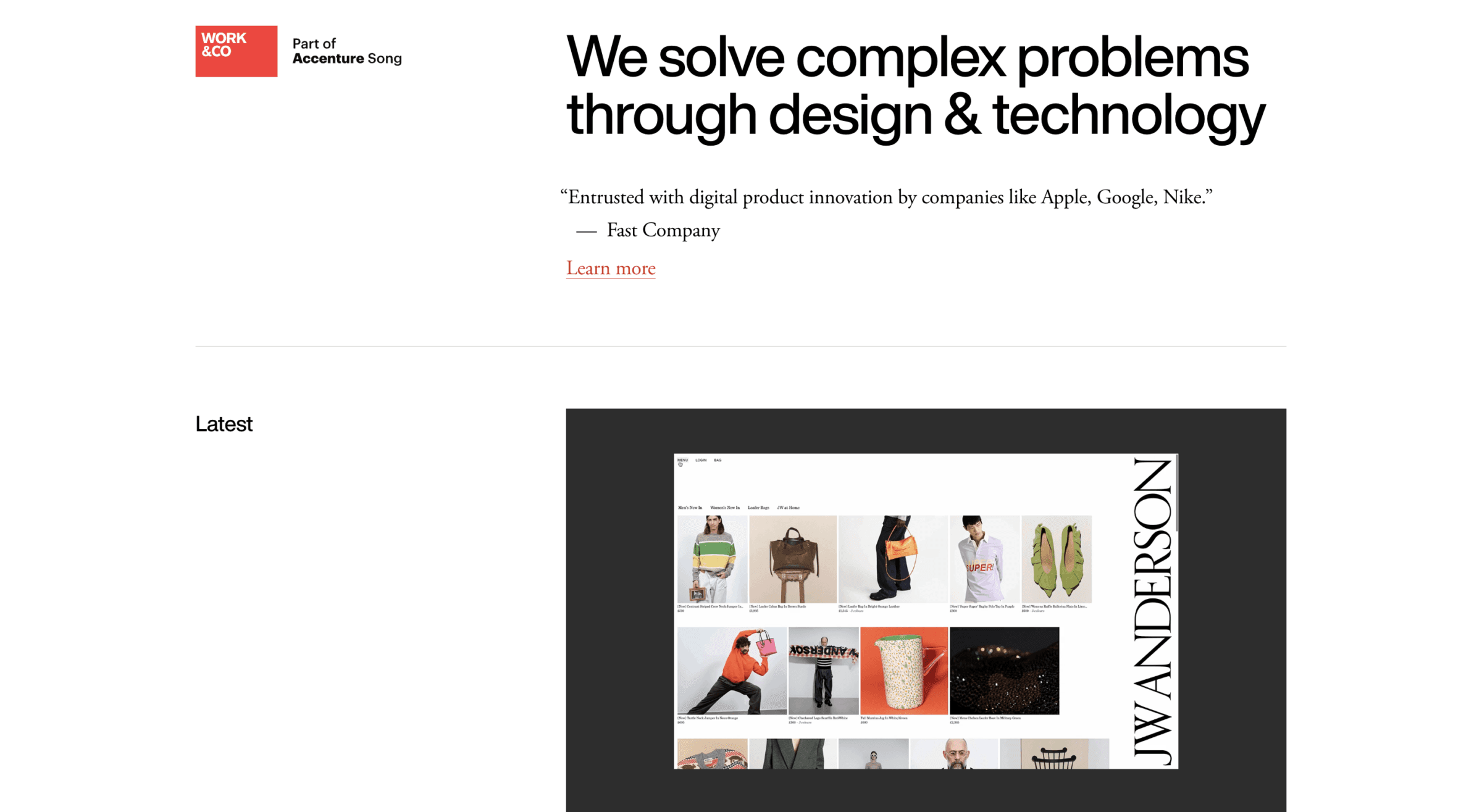
A team of former executives from R/GA, Huge, and Google founded Work & Co in 2013, building its reputation on products that succeed – Apple Music’s interface and the Google Arts & Culture app, alongside work for Twitter and Virgin America. This Brooklyn-based studio now has offices in Portland, São Paulo, and Copenhagen, and has picked up Webby, Awwwards, and Fast Company Innovation by Design recognition along the way.
3. Clay (Clay Global)
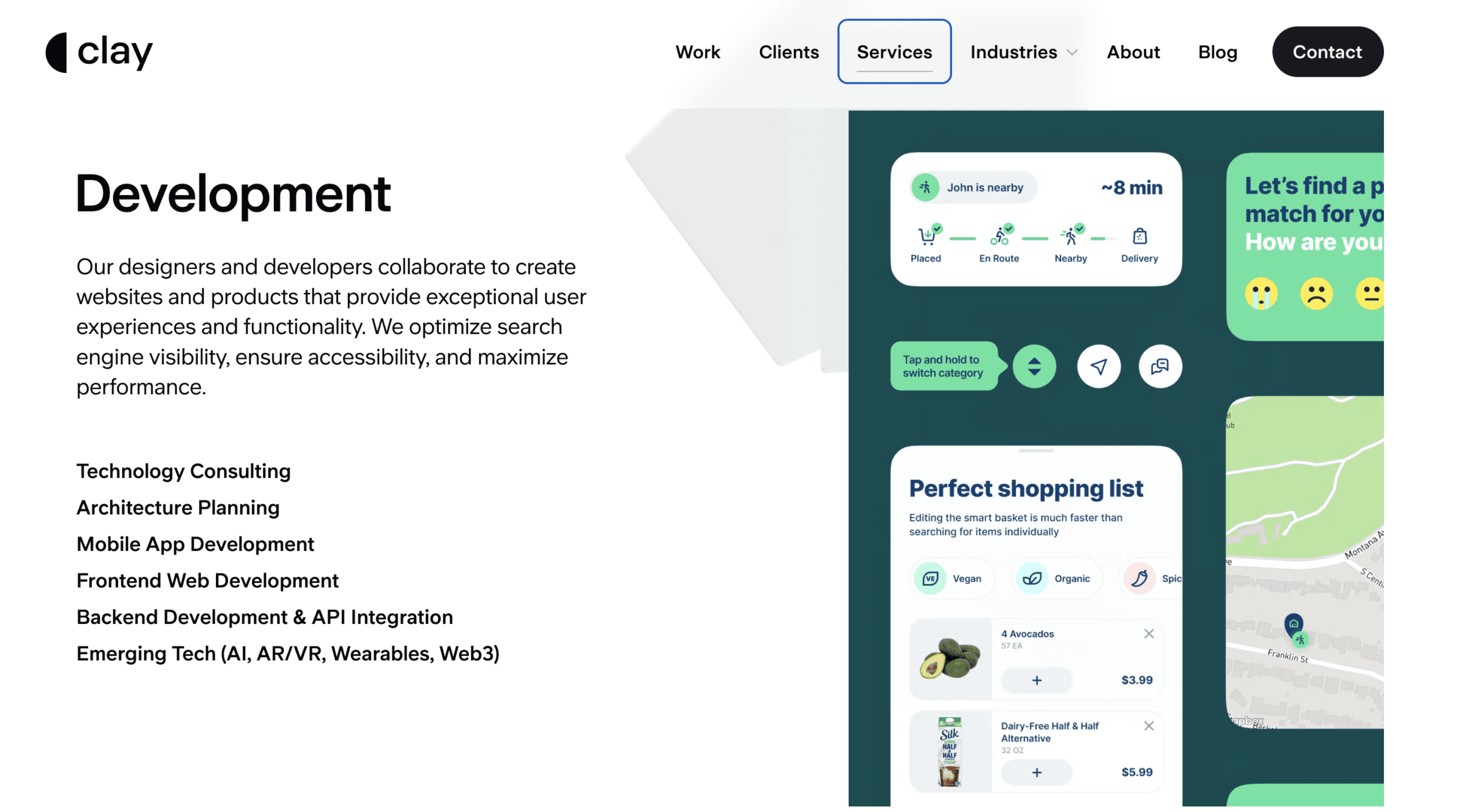
Clay’s 70-plus-person San Francisco team pairs strategy, UX, and visual design as parallel disciplines, which is why their output holds together from marketing site to product interior to mobile app.
Independent Clutch reviews specifically cite Clay’s strategic thinking alongside their visual polish, and the client list includes Google, Amazon, Facebook, Slack, and Cisco. Awwwards, Clutch’s Top Agency designation, and a CSS Winner award back up the reputation.
4. Hello Monday
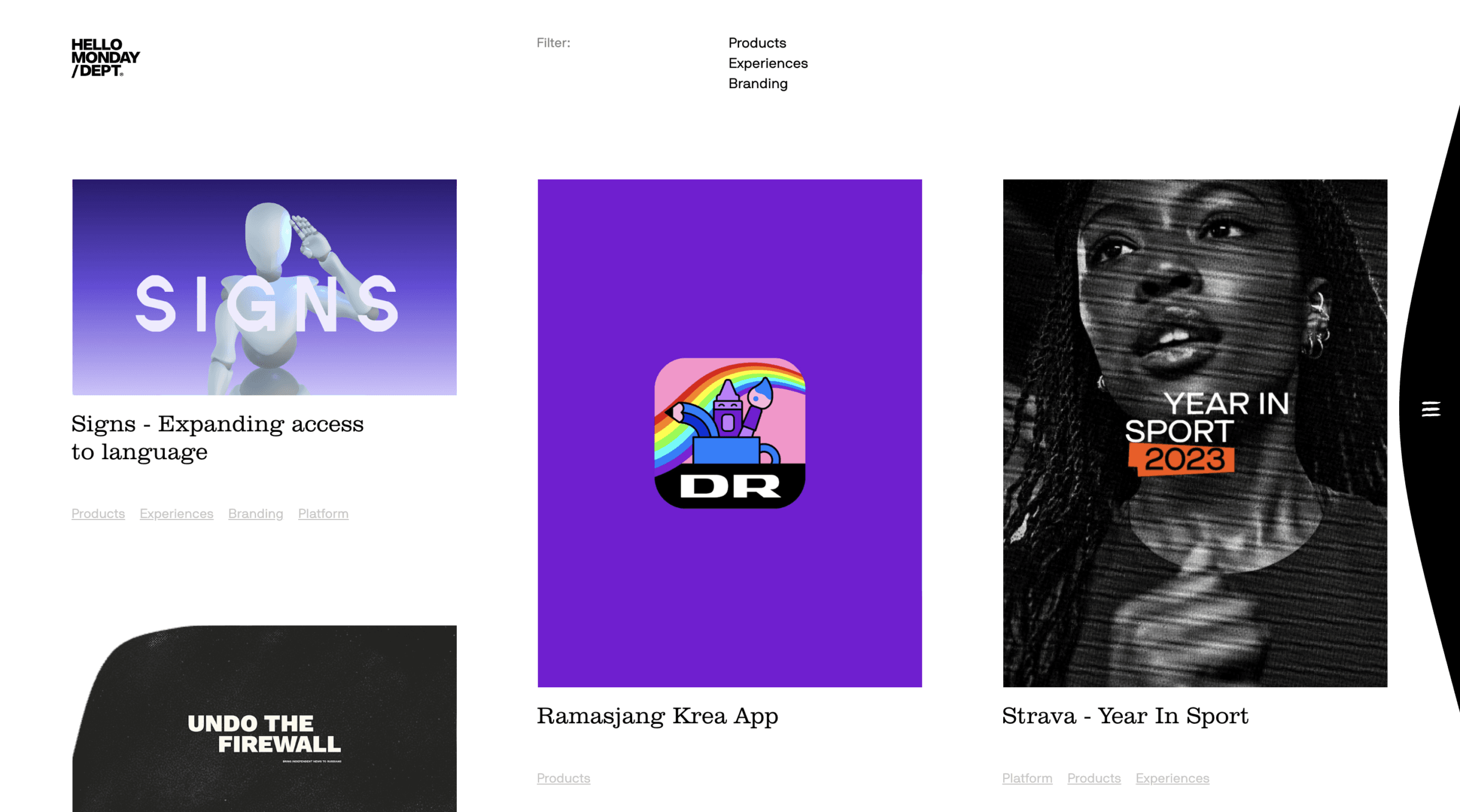
Scandinavian design culture shows up in Hello Monday’s obsession with making every interaction the most interesting version of itself. The agency started in Copenhagen in 2006 and now has a second base in New York. Its Google and Lego work has won consistent recognition – Awwwards Agency of the Year, FWA, Cannes Lions – and performs for users at scale, alongside client work for Adidas, Netflix, and Red Bull.
Apparently, Hello Monday would suit consumer brands that want delightful and memorable interaction mobile app design.
5. Bamboo Agile
Bamboo Agile is a full-cycle firm headquartered in Tallinn, Estonia, with mobile app design experience dating back to 2009. Unlike most design-only studios on this list, its team keeps UX/UI design and engineering under one roof. Besides, the team operates strictly under ISO 27001 information security standards, which can be the top priority for large enterprises.
The most famous clients of theirs represent telecommunications (A1 Telekom Austria Group, Orange, Telia), pharma (Sanofi), and fashion and e-Commerce (Pangaia). Plus, Bamboo Agile carries a 4.9/5 Clutch rating, and was featured many times in an independently published “Top Mobile App Development Companies” roundup, including the one by Classic Informatics.
6. Utility
Utility pairs product, design, data, and engineering leads on every project instead of routing work through them one at a time. The team’s stated focus is product-market fit and monetization strategy alongside UX/UI craft.
Since the company’s foundation in 2013, they have delivered more than 150 projects for clients including Airbnb, Coca-Cola, Samsung, the NBA, and Forbes. The team has also grown to over 100 people across its New York and Los Angeles offices.
If you are looking for a product strategy baked into design from the very beginning, you may want to consider this agency for your shortlist.
7. Goji Labs
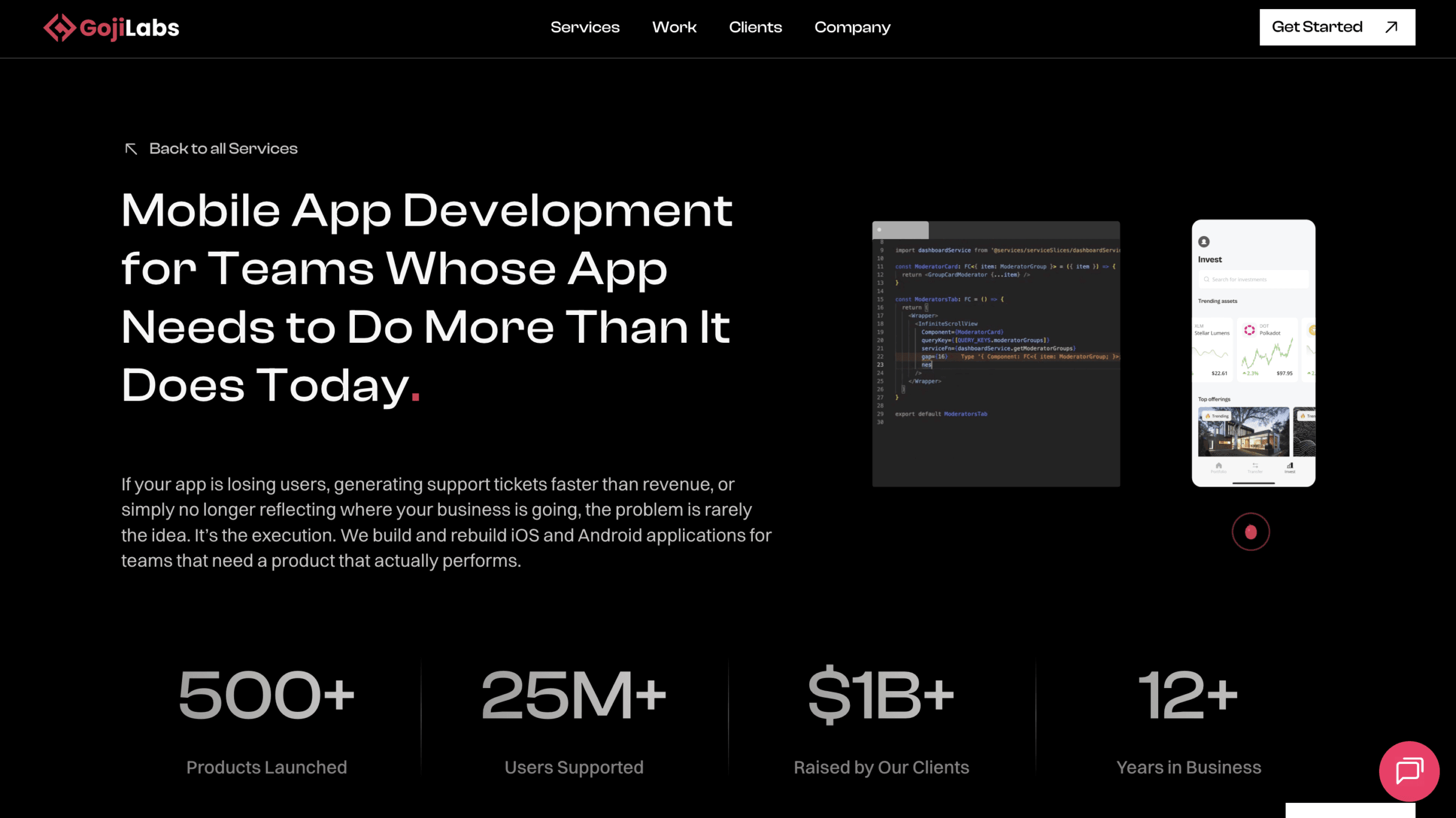
For founders who want a partner to own both product direction and execution, Goji Labs might be a choice. The company has launched 400+ products since its 2014 founding in Los Angeles.
Their approach is strategy-first, so they invest heavily in the discovery phase and fine-tuning clients’ requirements. Goji Labs’ client list includes the World Health Organization, the World Wildlife Fund, and even the City of Los Angeles.
8. Yummygum
Yummygum is based in Amsterdam and carries verifiable recognition – Awwwards, plus Clutch’s Top Design Agency in the Netherlands. Their focus is explicitly built around mobile and web apps for technology and startup clients. For example, they mention a platform redesign for hotel-tech company Hotelchamp and work for privacy-focused search engine Startpage.
This agency’s own figures cite over $130 million in funding raised by client startups it has worked with over the past years.
9. UX Studio
UX Studio was founded in Budapest in 2013. Even though this mobile application design company has worked with world-famous US tech giants, such as Google, Spotify, and HBO Europe, its pricing seems to be more affordable than other North American agencies of similar caliber.
Apart from having an impressive client lineup, they got Clutch’s Top UX Agency Europe nomination and UX Design Awards recognition.
10. ScienceSoft
ScienceSoft’s scale is unbeatable: 4,200+ completed projects across 1,400 clients, including IBM, eBay, Viber, Ford, and Royal Bank of Canada. Besides, they own the strongest compliance expertise, which makes it a fit for regulated industries where design decisions have to account for legal and security constraints.
The firm was founded in 1989 and now employs more than 750 people.
How to decide which agency to hire
Start with the practical filters: location narrows the list to whoever can work in your time zone or on-site if that matters to you, pricing rules out anything outside your budget, and the portfolio tells you whether the agency’s past work matches what you’re trying to build. Those three checks alone will cut this list down fast.
Still, regardless of which agency you shortlist, four questions tend to surface the real answer faster than a pitch deck will:
- What’s the last project where user research changed the design direction – and how? Ask for specific examples.
- What does your handoff to development look like in practice? This is the stage most agencies gloss over, and where projects most often lose time and budget after “design” is technically done.
- What happens if the app gets rejected on first submission to the App Store or Google Play? Few agencies address this directly – it’s worth knowing upfront whether you’re on your own for resubmission.
- How is AI showing up in your process right now – personalization, adaptive layouts, prototyping – versus where you’re staying hands-off? A concrete answer here separates agencies who’ve followed recent trends.
If you don’t already have a development team lined up to receive the handoff from a mobile application design agency, Bamboo Agile is one of the best options on this list to contact. Leave an inquiry in the form below, so we can start your project’s discussion.