Introduction
These days, more and more businesses across the globe are interested in mobile app development. It shouldn’t come as a surprise – the industry of Android and iOS-based apps has been steadily growing for the past ten years. Considering that the trend isn’t showing any signs of stopping, developing a mobile app seems like a promising investment for all kinds of brands.
The mobile app industry in 2026 has evolved into a sophisticated ecosystem where quality beats quantity, AI integration is standard, and user retention determines success. With global app revenue projected to reach $613 billion this year and users spending over 7 trillion hours annually in mobile apps, the stakes for hiring the right talent have never been higher.
Still, while demand for mobile developers continues to surge, the talent shortage is also intensifying. The U.S. Bureau of Labor Statistics expects a 17% job growth in software development roles through 2033, yet companies report that filling technical positions now takes an average of 42+ days. And that’s before factoring in the cost of a bad hire, which can be around $15,000-$17,000.
This guide cuts through the noise with current data, proven hiring strategies, and insights from industry leaders to help you hire a mobile development team in the most efficient way.
The mobile app market in 2026: What’s changed
Market maturity
The explosive growth phase of mobile apps has given way to what analysts call a “maturity peak.” Thus, Google Play and Apple App Store showed minimal growth in new apps in 2025, with Google actually reducing its catalog through aggressive quality enforcement.
Both major app stores implemented stricter technical requirements, removing low-performance “zombie apps” to prioritize AI-compatible, high-quality software.
AI integration
Perhaps the most significant shift: AI is a baseline expectation now. Here’s what data shows:
- 60% of mobile apps now integrate AI features (up from less than 20% in 2023);
- 40% of enterprise applications are expected to feature task-specific AI agents by the end of 2026, an eightfold increase from 2025;
- 12% salary premium for developers with AI/ML expertise compared to general mobile developers.
For hiring managers, this means you’re not just looking for iOS or Android developers anymore. Now you need engineers who understand on-device ML models, can integrate AI APIs efficiently, and grasp the privacy implications of AI-powered features.
Before you hire mobile app developers, consider this
There are a lot of reasons as to why some applications fail. Sometimes, the app itself is poorly put together; sometimes, the company is out of luck, and a good product simply doesn’t catch on with the target audience. Sometimes you just hire the wrong devs.
Luckily, there are some precautions you can take to maximize your chances of success. Or rather, consider the following.
Development budget
You need to clearly understand how much you will be able to invest into your app’s development. It’s likely that whatever app idea you have in mind will turn out to be more costly than you expect, so be prepared to trim some of the bells and whistles.
It’s good to plan your spendings on an aspect-by-aspect basis. For example, think whether your app will be:
- small, medium, or large (enterprise-grade) in size;
- basic, average, or complex in terms of functionality;
- native or cross-platform;
- reliant on third-party integrations and to which extent;
- etc.
A lot of these decisions have a drastic effect on the overall price. Try to maintain a degree of flexibility in terms of budget: you never know what setbacks or hidden costs you might run into.
Read our article about the price of Android mobile apps to learn how much each aspect of application development will cost.
Core functionality
Releasing your dream app from the get-go is very unrealistic. That’s why most apps do not launch with their entire set of planned features intact. Sometimes the deadline is just too strict, sometimes the budget isn’t enough. In any case, you need to prioritise the functionality as early as possible. Define your application’s most essential features.
In any case, you need to prioritize the functionality as early as possible. Define your application’s most essential features. Consider developing an MVP (minimum viable product) or a prototype first – both are cheaper and low-risk ways of getting your core app idea off the ground.
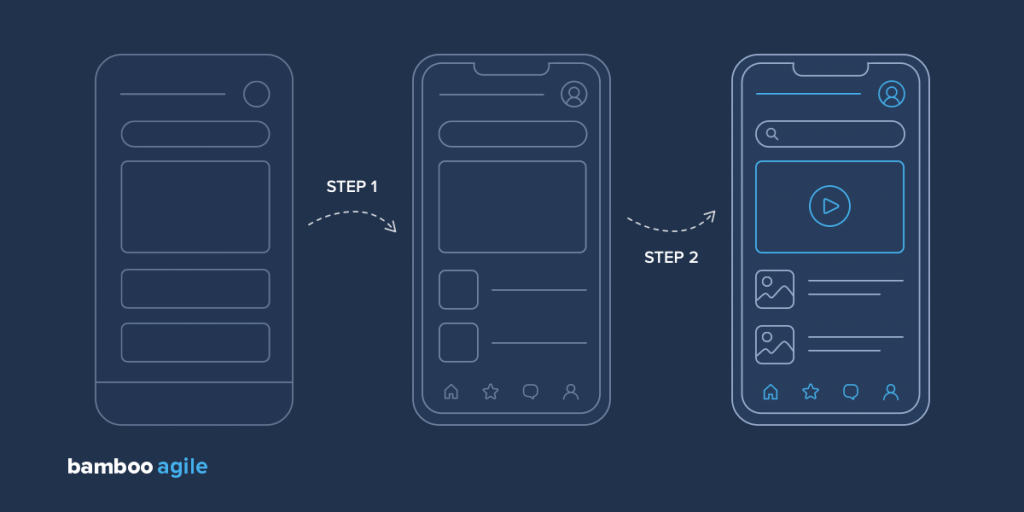
Another good move would be to set measurable goals to track your app’s success at launch (number of downloads, interactions, payments, etc.). This will also prepare you for what sorts of professionals your project will need: for example, if the app’s main appeal lies in the ease of use, you will most definitely require a strong UI designer.
If figuring all of this out sounds overwhelming, you might want to hire a business analyst. What’s more, you may need the services of a Product Owner, in case you’re not very familiar with the app’s target industry.
Advanced capabilities
Your app can be equipped with specific technology for data analysis, automations, or delivering other powerful features like augmented reality or voice assistants.
Keep in mind that not every single development team has experience in developing or integrating this. Before hiring developers, you may want to check their expertise in the following areas (depending on the task):
- On-device ML capabilities (Core ML, TensorFlow Lite, ML Kit);
- Cloud AI integration (OpenAI, Anthropic, Google Gemini);
- AR/VR integration (ARKit, ARCore);
- Voice interface development.
Technology stack
Different developers specialize in different technologies (languages, frameworks, operating systems). So if possible, try to decide which tech you’d like to use before scouting for potential partners.
If you do not have the technical expertise to choose a stack on your own, don’t hesitate to contact a professional development team for a consultation. Companies like Bamboo Agile have vast experience with a large number of technologies and can suggest the optimal set for your project.
Prior experience in mobile
Depending on the complexity of your project, you may require very experienced developers to pull it off. It’s best to avoid beginner developers altogether if the app you’re making isn’t completely rudimentary.
Of course, even fresh graduates can have incredible programming skills – but nothing beats actual industry experience when it comes to communication, process organization, and problem solving. So try to get professionals with at least a few years of field expertise.
A simple way to measure a developer’s experience is looking through their portfolio and client testimonials. You can even try and contact their former partners to get an honest review of their services.
Code ownership
Who owns the code written by the programmer? This is something you have to define before entering any kind of collaboration, especially one with freelance or outsourced developers. It’s crucial for preventing disputes later down the line.
Certain companies will ask for partial code ownership. But this has a high likelihood of making you dependent on that particular developer, which is less than optimal long-term. Make it clear that you want full ownership of the code before signing a contract.
Company culture
This mostly regards freelancers, remote employees, and in-house developers. Despite having all the technical know-how you could wish for, some may simply be unable to integrate into your company workflows.
If one employee’s way of organizing work or communicating with others hinders the project, it’s worth looking into a different candidate. Try to find out how your potential hires go about these things prior to onboarding, if possible.
Common oversights
We approached Natalia Minayeva, the Strategic Partnerships Executive at Bamboo Agile, with the following question: “What are some common things clients tend to forget about when starting development, some things they don’t pay enough attention to?”
The response was a short list:
- Cultural differences between the developer and the client (namely, different work cultures in different countries);
- A choice of technologies that allows for easy support;
- A focus on specific technologies based on the future project roadmap (will it need scalability, will some specific native-only functionality be necessary);
- Effective onboarding.
“If it’s the client’s first experience in hiring remote developers, they need to think through an effective onboarding process, as well as how the remote work will be organized,” says Natalia. “Short business trips are often a good practice for new specialists, which will help them better understand the client’s business.”
Want to know some other common missteps to avoid? Give our article about hiring Android developers a read.
Types of mobile app developers for hire
There are different types of mobile developers you can hire, all of which imply different workstyles and price ranges. Which will work best for your project? Let’s look at the options.
Freelancers
Freelance developers are extremely accessible and are usually the most effective option for small, undemanding projects (creating a basic website, for example). If you feel like your project can do without a custom UI, well-built architecture, outstanding performance, and industry-standard security measures, then this is a safe bet. Relatively speaking.
The thing is, checking a freelancer’s level of competence can be very difficult. The least you can do to prevent flushing your money down the drain is taking the time to check the freelancer’s customer reviews.
Sometimes a software developer is extremely skilled on paper but has a lacklustre work ethic in practice. So, if you have a substantial amount of cash on stake, either consult an IT specialist you personally know, or look for mobile app developers elsewhere.
Freelancer pros:
- Low cost;
- Flexibility;
- Accessibility;
- Massive worldwide talent pool;
- No office & equipment costs on your end.
Freelancer cons:
- Difficult onboarding;
- Limited control;
- Possible communication issues;
- Does not suit large projects;
- No loyalty or long-term commitment;
- No quality guarantees;
- Often, limited experience with modern dev practices (AI integration, security standards).
Typical cost: $15-$150/hour depending on location and expertise.
In-house developers
This is the complete opposite of freelancers. You hire developers as full-on employees and provide all the necessary equipment, technologies, and office space. This offers the greatest degree of engagement and direct control among all the options.
The obvious downside is, of course, the cost. Another big one is a lot of extra responsibilities and risks. The burden of finding the right talent and organising all aspects of the development process is completely on you.
To add to this, in 2026, competition for top mobile talent is fiercer than ever. 61% of IT leaders plan to increase permanent headcount in 2026, but 65% found it harder to hire skilled IT professionals in 2025 than the year before. Average time-to-hire has also stretched to 90-120 days for senior developers.
It’s extremely hard to pull off without prior industry experience. Because of that, this option is not recommended for businesses that are just dipping their toes into mobile application development.
In-house development pros:
- Full direct control;
- No communication lag;
- Higher degree of engagement;
- Loyalty and long-term commitment;
- A better understanding of your business workflow and processes;
- Integration into company culture.
In-house development cons:
- Costs of equipment, hardware, software, and office space;
- Costs of extra benefits (insurance, memberships, etc.);
- Full-time salary;
- Hard to downsize if the project stops mid-contract;
- Long and complicated hiring process;
- Difficult to manage without industry experience;
- Talent pool limited to one location.
Typical cost: $100,000-$250,000 per developer annually (including all overhead). It also depends on location and experience.
Staff augmentation
While the concept of staff augmentation may sound somewhat similar to freelancers, they come with their fair share of differences. The workforce is supplied by specialised companies, who connect you with reliable specialists based on your project’s technical requirements.
Instead of working as a semi-independent party, remote employees temporarily become part of the team. This greatly boosts communication and allows you to monitor the employee’s progress a lot more efficiently. If you’re working on a medium-sized project, this is a solid choice.
Keep in mind that in most cases you’ll have to be the one to provide all the necessary tools for the remote employee. If you don’t want to spend extra money on workspace maintenance and various developer toolkits, the next segment may be a smarter choice.
Staff augmentation pros:
- Direct control;
- Effective communication;
- High level of expertise;
- Simplified and faster hiring process;
- Quick replacement if necessary;
- Large available and pre-vetted talent pool.
Staff augmentation cons:
- No internal company knowledge;
- Onboarding costs;
- Lower level of integration into company culture;
- High long-term cost.
Typical cost: $40-$90/hour per developer.
Outsourced developers
Outsourced mobile app development stands as the most popular and cost-effective option for complex and long-term software projects. Outsourcing companies rely on their level of expertise and service to compete, so they strive to provide the most experienced and skilled development teams on the market.
This doesn’t just include software engineers: project managers, QA experts, business analysts, UX/UI designers, and so on are all available for hire. In addition, every specialist is at least middle-level, and the majority of programmers are senior-level.
The big benefit of outsourced mobile app development is that the burden of managing it falls on the shoulders of the outsourcing company, not the customer. Though, you’re still required to engage through calls, messages, and meetings to keep updated on the progress.
Before hiring an outsourced team, check their corporate resume, look at their qualifications, read some of the company’s case studies, and study their customer reviews. Personally acquainting yourself with team members can also help you decide whether you want to work with a particular vendor or not.
Outsourcing pros:
- Solid industry expertise;
- High efficiency;
- Low cost;
- More time for core activities;
- Access to expert talent worldwide;
- Less stress in terms of team management;
- Access to specialized expertise (AI, AR/VR, blockchain, etc);
- Less stress in terms of team management and its scaling up and down.
Outsourcing cons:
- Less direct control;
- Can be inflexible;
- Possible communication lag or miscommunication;
- No internal company knowledge;
- Quality control can be difficult.
Typical cost: $50,000-$250,000+ per project, or $40-$90/hour for ongoing work.
Mobile developer types comparison
| Criteria | Freelancer | In-house team | Augmented staff | Outsourced team |
| Cost | $15-$150/hr | $50-$120/hr | $40-$90/hr | $40-$90/hr |
| Level of process control | Low | High | High | Medium |
| Communication | May be lacking, depends on timezones | Direct | Direct | Depends on timezones |
| Quality control | Can be difficult | Direct | Direct | Can be difficult |
| Hiring speed | 1-2 weeks | 8-12 weeks | 1-2 weeks | 2-4 weeks |
| Talent pool | Global | Local | Global or local | Global |
| Scalability | High | Low | Medium | Usually high, but depends on the contractor |
| Developer’s engagement | Low | Very high | Medium | High |
Where to find mobile developers in 2026
You should check out the following platforms depending on which type of developer you’re looking to hire.
Where to hire freelancers
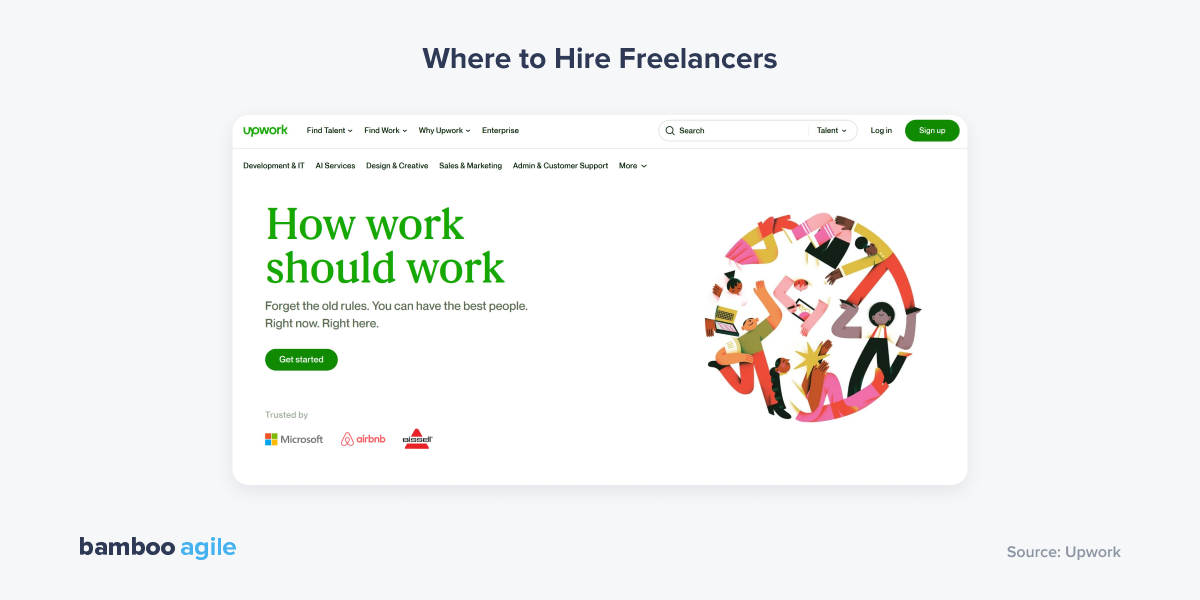
You can scout out freelance developers on resources like:
- Upwork;
- Behance;
- Toptal;
- Gun.io;
- Youteam.
Additionally, you can search your local hiring platforms or turn to social networks like LinkedIn. Another great method for scouting coding talent is by visiting hackathons, such as DEF CON, HackYeah, ShellHacks, and others.
Where to hire in-house developers
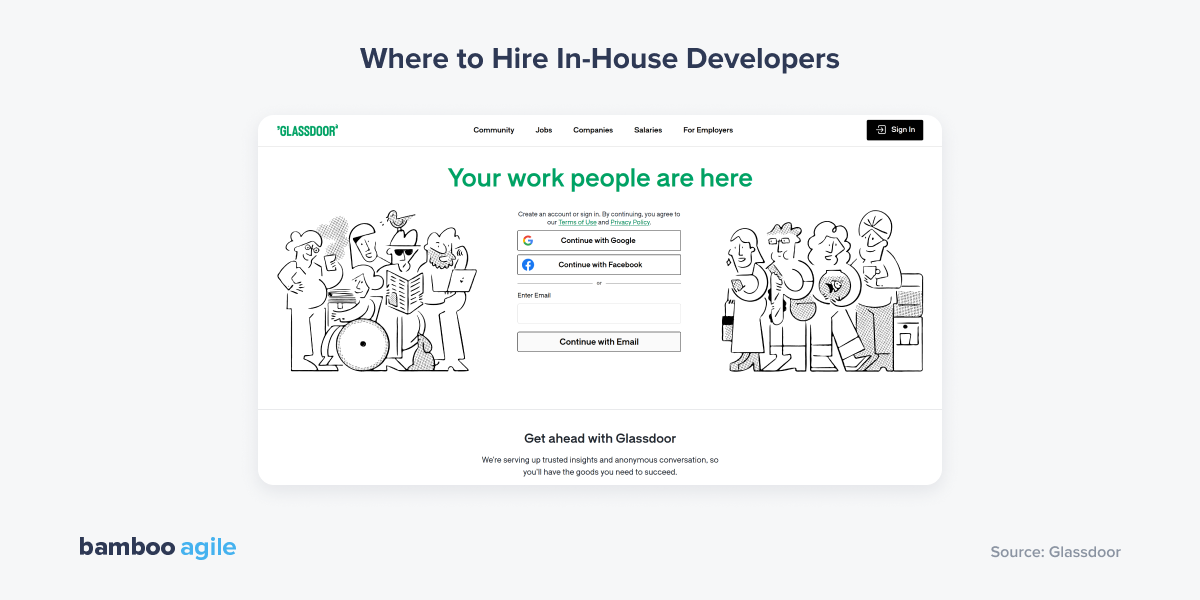
In-house developers are typically found on:
- Glassdoor;
- Indeed;
- LinkedIn;
- Stack Overflow Jobs.
Similar to freelancers, in-house developers can be scouted at hacking competitions and developer conferences. It’s also advisable to check out your local hiring platforms, since location is a deciding factor in this case.
Where to hire augmented teams
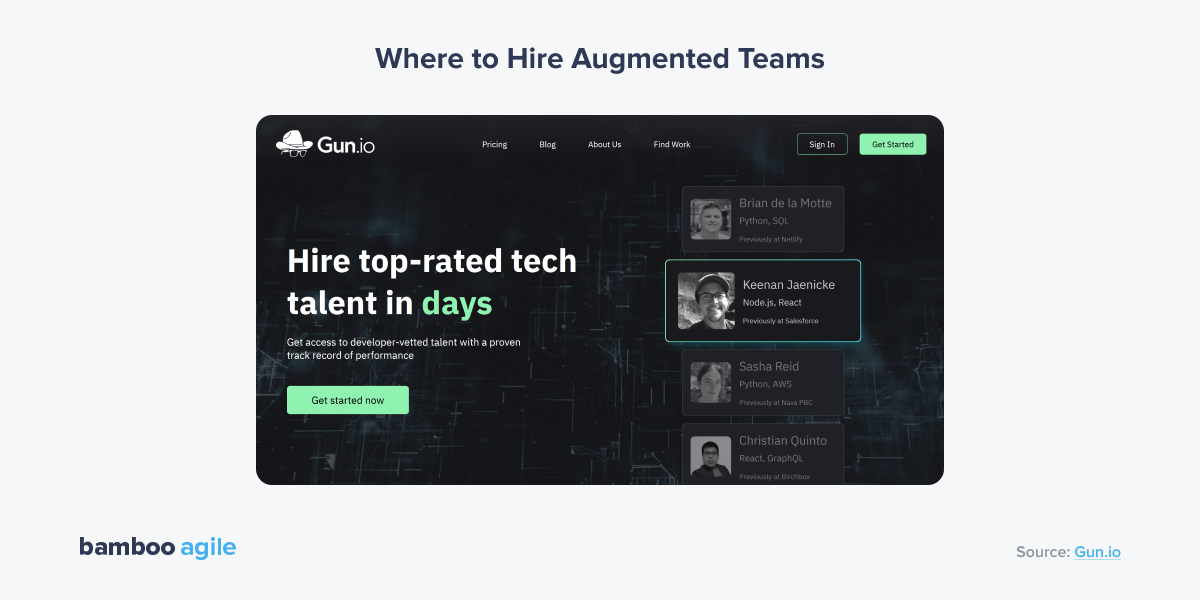
Remote developers can be hired on:
- Toptal;
- Turing;
- Lemon.io.
You can also contact development companies directly through LinkedIn or their website and ask if they provide team augmentation services.
Where to hire outsourced teams
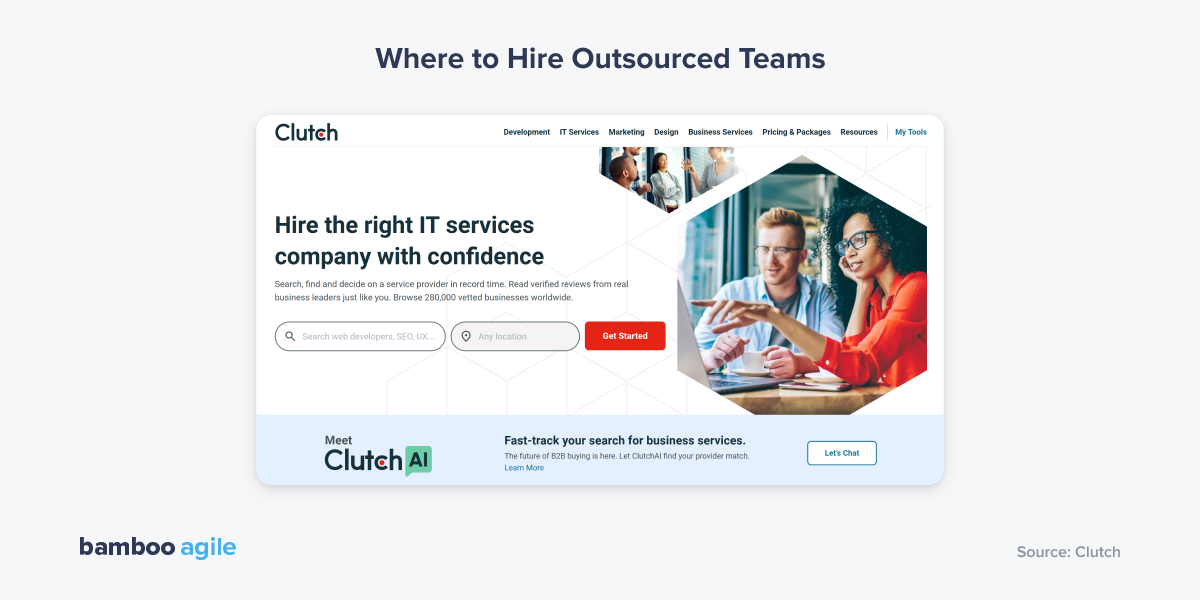
There is no shortage of resources for finding outsourced development teams:
- GoodFirms;
- Clutch;
- DesignRush;
- TopDevelopers.
Outsourcing companies are also often discovered at popular tech events, such as MWC, CES, Viva Technology, GITEX, etc. You can always search up local tech events on Google or LinkedIn and Facebook (just type “tech event [your location]”).
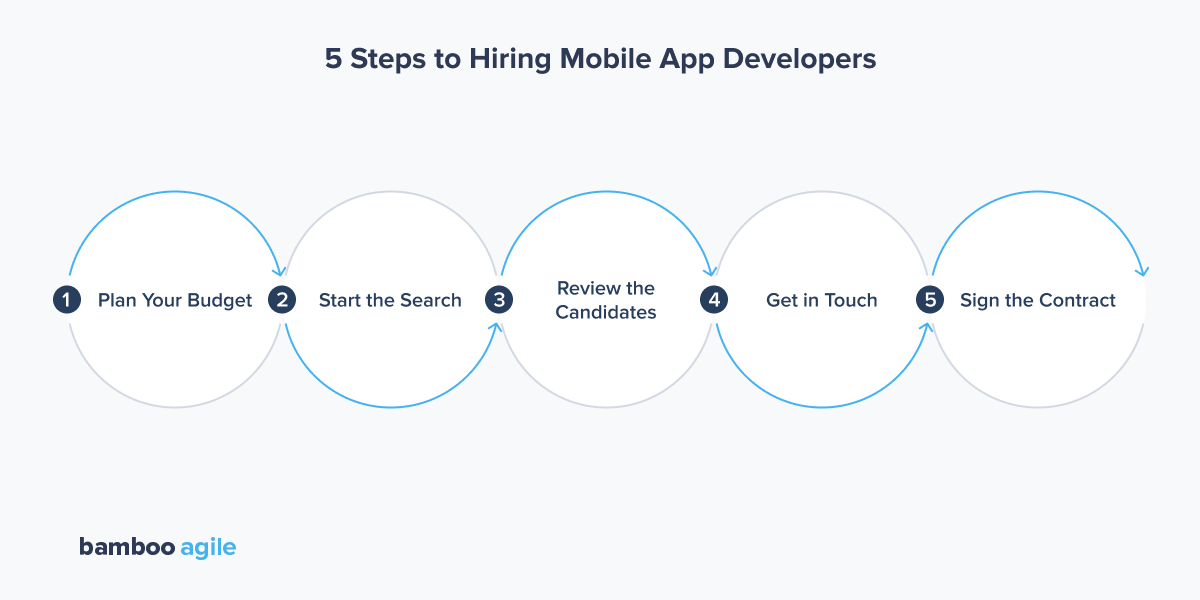
How to hire developers in 5 steps
Step 1. Plan your budget
Start with confirming your budget. For this, you’ll need to solidify your requirements and platforms. Think whether you’d like to hire in-house, freelancers, or outsourced developers – this will majorly play into your budget.
No matter how little money you have, never compromise on your core concept and app quality. And remember that you don’t need exorbitant funds to launch something like an MVP. Try to remain flexible within a reasonable range.
You can even hire a development team just to carry out the discovery phase where you plan out the project and its budget in detail.
Learn more about the discovery phase in this article.
Step 2. Start the search
Once you’ve settled on the budget and the type of developer you want to hire, it’s time to go searching. We’ve already listed the main spaces you should check out depending on who you are looking for.
But as a rule, any candidate or development company will have a LinkedIn page, where you’ll be able to find out more about their expertise. Various events such as hackathons and high-tech trade expos are also good places to discover expert talent.
Step 3. Review candidates
The initial screening process for freelancers, in-house, and outsource developers is pretty much the same. You check their portfolio, experience, client reviews, and so on. When working with individuals, you may prepare a test task or a set of interview questions to test their industry knowledge.
Prior to or during the interview, you may want to ask candidates about their portfolio and approach to work:
- Request 2-3 apps they’ve built with App Store/Play Store links;
- Ask them to walk through architecture decisions for one app;
- Check if apps are still maintained (good sign of code quality);
- For AI-focused roles, ask about ML model implementation choices.
Red flags in 2026:
- Dismisses cross-platform entirely or promotes it for everything (lack of nuance);
- No questions about product, users, or business context;
- Can’t discuss app performance optimization.
Ideally your future partner should have experience in the domain you’re targeting (Healthcare, Agriculture, Automotive, Food Delivery, etc.). At the very least they need several years of experience in mobile application development on your platform of choice.
Acquaint them with your application requirements. It’s best to create a requirements document before getting in contact with a potential partner. However, if you’re not sure how to go about it, outsourced development teams are usually more than ready to help you compile one.
This document will give you a better understanding of the types of specialists you need on the crew and narrow down your budget. Don’t forget to ask the potential partner about the payment models they have available (fixed price, T&M). Depending on the type of project, one may work better than the other.
Step 4. Sign the contract
Does the developer seem just right? Don’t rush to signing a contract yet – you need to make sure your hire is willing to sign a non-disclosure agreement. It’s a crucial step to protect your app idea, as well as the code and assets that will be created during its development.
Once that is settled and all the necessary agreements are signed, you can begin custom mobile app development.
Conclusion
The importance of quality app development cannot be overstated in the modern mobile market. Budgeting, prioritizing core functionality, technology stack, developer experience, and code ownership are all essential factors to consider, as is the developer type you want to work with.
It’s a lot, but this strategic approach to hiring will help your business tap into the thriving app market with a high quality end product. At worst, it will minimize your losses.
Key takeaways:
- Think long-term, since maintenance, updates, and evolution require ongoing development capability.
- Plan meticulously before you start hiring. Prepare clear requirements, set realistic budgets, and prioritize features to save time and money;
- Match the hiring model to your needs: freelancers for quick tasks, in-house for core products, augmentation for scaling, outsourcing for comprehensive projects;
- Verify experience thoroughly. Portfolio, technical exercises, and system design discussions reveal more than CVs;
- Invest in onboarding;
- Think long-term, since maintenance, updates, and evolution require ongoing development capability.
Bamboo Agile is an acclaimed software development team from Estonia with over 20 years of experience behind its back. If you don’t feel like scouring multiple platforms in search of some worthwhile candidates, consider signing up for a free consultation with experts.
Want know more about mobile development? Read our article on mobile app development trends.