Why IoT projects fail: the overlooked implementation challenges
Large-scale IoT implementation remains a challenging task. Organizations face major challenges that include:
- integrating connected devices
- guaranteeing reliable data flows
- managing cybersecurity risks
- creating wrong PoCs.
However, companies across industries are demonstrating that effective IoT deployment is achievable. Moreover, it can deliver substantial operational and strategic advantages.
Although the underlying technology – sensors, connectivity, data analytics, and cloud platforms – may be the same, its applications differ depending on the specific objectives of the business. The following sections provide specific examples of IoT adoption in various industries that show how organizations use the same technology base to achieve completely different goals.
If you are planning your own IoT deployment, start with IoT consulting services to map out feasibility, scope, and ROI. Or explore our shortlist of top IoT development companies to find the right partner.
IoT implementation in manufacturing
Manufacturing became one of the earliest large-scale adopters of IoT. Production downtime, energy losses, and quality deviations have an immediate impact on profitability, so it is easier to justify monitoring and optimization investments compared to industries where the benefits are more indirect.
According to Eseye 2025 State of IoT paper, 76% of manufacturers report increasing their IoT budgets, and 86% are planning to scale their deployments. Most of them are already operating at a meaningful size, as 57% are managing between 1,000 and 10,000 devices.
At the same time, the focus is expanding. Revenue is still essential (44%), but it is not the only success indicator now. Sustainable development (46%) and social impact (45%) are equally important, reflecting a change in manufacturers’ perceptions of productivity.
Common IoT benefits manufacturers observe include:
- predictive maintenance that replaces reactive repair cycles
- reduction of unplanned downtime
- optimization of energy consumption
- real-time visibility into production processes
- gradual transition toward service-oriented manufacturing models.
Here are some examples of IoT implementation case studies in manufacturing.
SMC Corporation’s Smart Field Analytics deployment is one example. Customers operating pneumatic equipment frequently experienced energy waste caused by compressed air leakage. This problem is difficult to detect with traditional inspection methods.
SMC enabled continuous analysis of machine behavior through connected monitoring and analytics. As a result, customers achieved approximately a 20% reduction in compressed air waste while preventing downtime through early anomaly detection. Equally significant was the commercial impact: SMC transitioned from a component manufacturer toward a provider of ongoing digital services supported by operational data.
Julien Bertolini, IoT Expert at Volvo Group, shared one problem-driven IoT implementation example on the IoT Leaders Podcast.
“I asked a maintenance guy, ‘What’s your worst recurring issue?’ He said, ‘Battery failure on the AGVs. They are 1.7 tons – it takes two people to push one. And it happens more than once a week’, said Julien.
The team tracked the voltage data and found a clear pattern – failures constantly occurred when levels dropped below 23 volts. Knowing this fact, they built a lightweight system.
“We built a system to alert maintenance teams before it drops too far. Now, they have 45 minutes to act before failure. It is super simple predictive maintenance, and it saves a lot of money.”
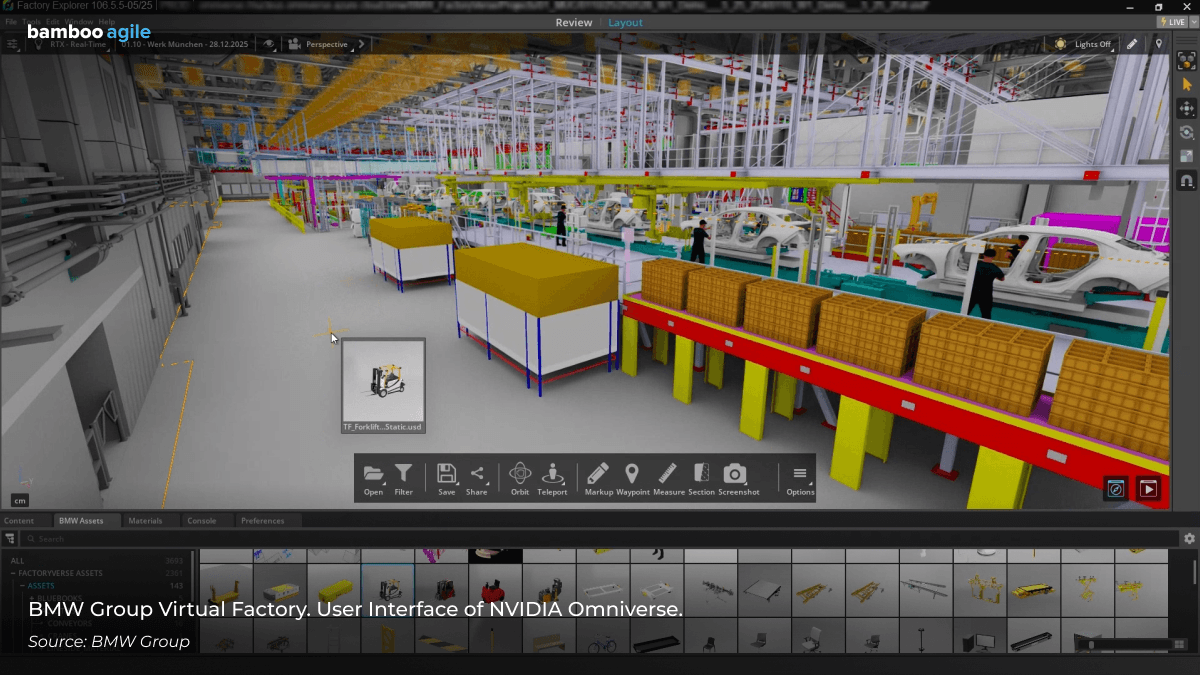
BMW uses the concept of a Virtual Factory, a digital twin of its factories, where data from the Internet of Things sensors is collected in real time to monitor the condition of equipment, track production processes, and predict possible breakdowns. This system optimizes logistics, increases production efficiency, and reduces equipment downtime.
IoT implementation in healthcare
Healthcare adoption follows a noticeably different logic. Here, implementations are primarily motivated by continuity of care and resource pressure. Traditional healthcare models rely on episodic observation when patients are monitored during appointments but largely invisible between them. IoT extends visibility beyond clinical environments.
Typical benefits include:
- remote patient monitoring outside hospitals
- improved utilization of medical resources
- reduction in hospital readmissions
- better workflow coordination for clinicians
- earlier detection of health deterioration.
One specific example of an IoT healthcare implementation with measurable impact is the RespiraSense continuous respiratory rate monitoring system. It is deployed in acute care settings to address the well‑known problem that respiratory rate is often inaccurately or infrequently recorded manually by medical personnel. The system uses a wearable chest sensor that continuously measures respiratory rate and transmits data wirelessly via Bluetooth to a centralized monitoring platform. Unlike traditional manual observations, which are carried out intermittently, RespiraSense provides real-time physiological data and automatic alerts when abnormal breathing patterns are detected, which allows continuous monitoring of patients without increasing the burden on staff.
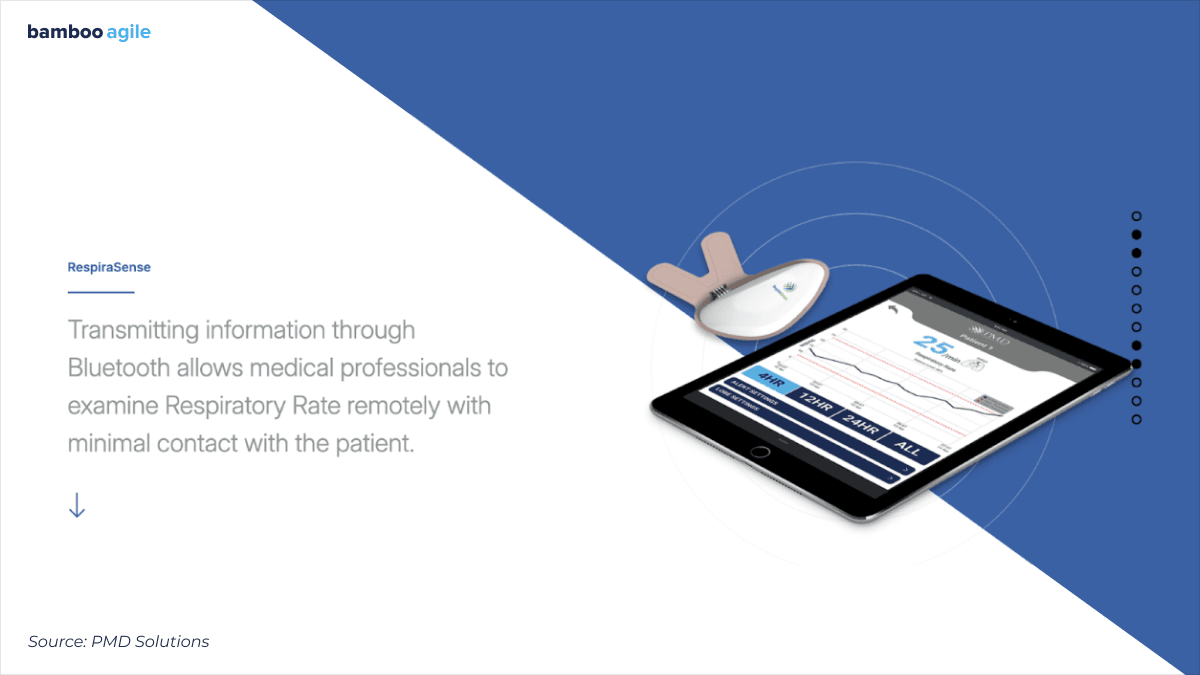
Clinical assessments have shown that respiratory monitoring indicators fully comply with the gold standard capnography indications, confirming the accuracy of monitoring in real hospital conditions. Further studies showed that the increased respiratory rate detected by the system was associated with clinical signs of deterioration (such as decreased oxygen saturation and fever) 12 hours before the use of conventional detection methods. These results indicate that IoT-based continuous monitoring can support earlier clinical intervention, improve patient safety, and enhance decision-making through real-time data availability.
IoT implementation in retail
While e-commerce platforms generate detailed behavioral data, traditional retail historically operated with limited insight into customer interaction and real-time inventory conditions. So retail presents another distinct motivation for IoT adoption: the need to bring digital-level analytics into physical environments.
Common benefits are:
- real-time inventory visibility
- automated stock monitoring
- improved customer experience
- reduction of lost sales due to stockouts
- data-driven store operations.
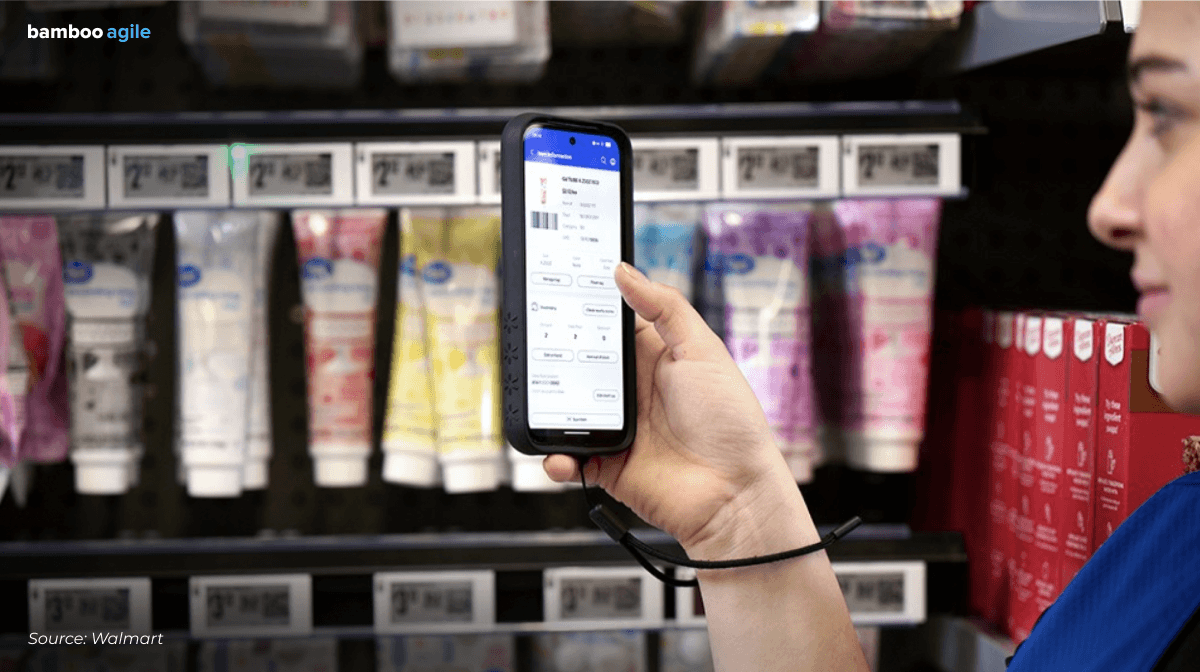
Walmart stores represent one of the most visible experiments in this direction. They focused on smart shelf technologies capable of detecting empty inventory positions automatically and notifying staff to address one of retail’s most persistent operational inefficiencies – unnoticed stockouts.
Similarly, Zara uses RFID (Radio Frequency Identification) tracking across stores and distribution centers. The RFID system encodes every item of clothing in the logistics centers, which means that when supplies arrive in stores twice a week, the system immediately determines which sizes and models need to be replenished.
IoT implementation in logistics
Logistics environments introduce an additional layer of complexity because connected assets are constantly moving across regions, infrastructures, and network operators. As a result, connectivity reliability becomes inseparable from operational performance.
Typical benefits are as follows:
- real-time fleet and cargo visibility
- predictive maintenance for vehicles
- route optimization and fuel savings
- monitoring of shipment conditions
- improved transparency across supply chains.
DHL’s deployment of IoT-based shipment monitoring illustrates how visibility transforms logistics operations. Historically, when transporting confidential goods, control over their transportation was limited, which increased the risks associated with temperature fluctuations or processing conditions. Thanks to the introduction of sensors capable of tracking the location and environmental parameters throughout the entire cargo route, DHL has provided continuous monitoring and preventive intervention in case of anomalies.
This approach aligns with other industry IoT implementation case studies. Maersk has introduced connected container tracking systems that provide real-time information about cargo conditions during maritime transport, helping reduce uncertainty across global supply chains.

UPS has similarly implemented connected fleet analytics analyzing routing efficiency and driver behavior, contributing to measurable reductions in fuel consumption and delivery times.
IoT implementation in agriculture
Agriculture represents one of the fastest-growing IoT domains because farming has traditionally operated under high uncertainty. Decisions about irrigation, fertilization, and harvesting were often based on experience rather than continuous measurement.
Major benefits include:
- precision irrigation and water optimization
- crop and soil monitoring
- livestock tracking
- reduced fertilizer and pesticide usage
- improved yield predictability.
The precision agriculture initiative by John Deere is a large-scale implementation of IoT in farming. Connected machinery such as tractors and harvesters, together with field sensors, continuously collect and transmit data via the JDLink™ system to the Operations Center cloud platform. This ecosystem integrates GPS navigation, real-time monitoring, and variable-rate application technologies with advanced analytics and machine learning to optimize farming operations and support data-driven decision-making. Consequently, farmers who use these solutions have reported noticeable improvements, including a 15–20% increase in crop productivity and a 25–30% reduction in water and fertilizer usage, along with lower fuel consumption and reduced equipment downtime due to predictive maintenance. At a larger scale, in the United States, precision agriculture technologies have also contributed to significant reductions in fertilizer use and overall resource waste, leading to substantial cost savings.
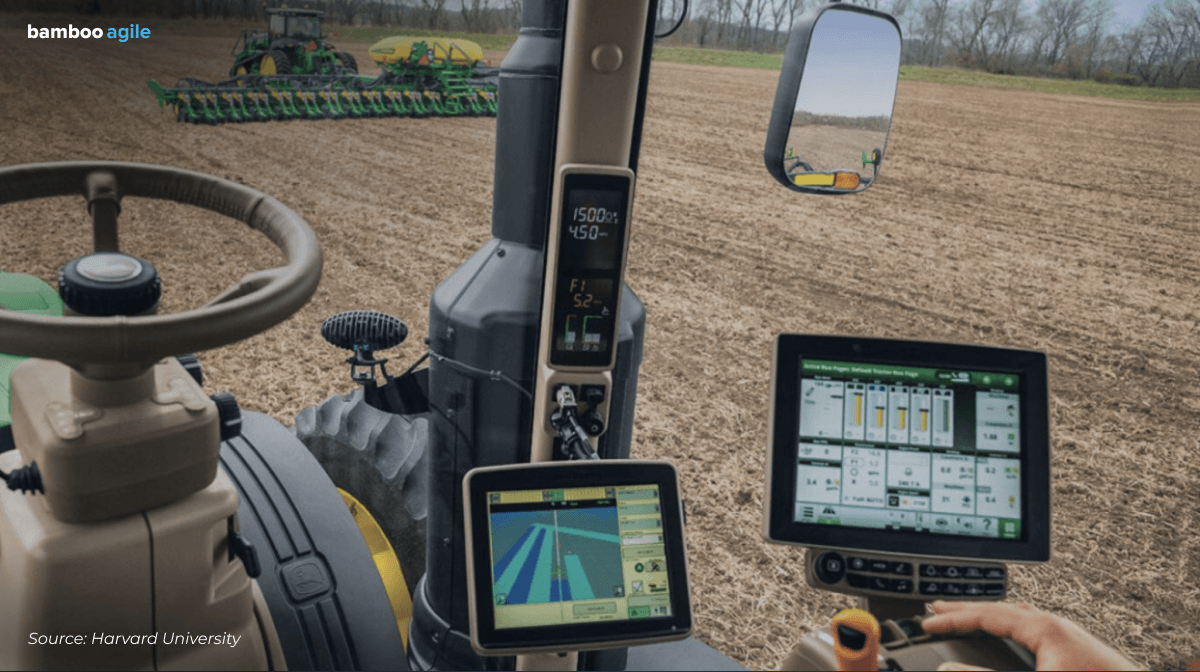
Similar developments are visible across the agricultural technology ecosystem. Bayer’s Climate FieldView platform combines sensor data with satellite imagery to provide real-time agronomic insights that support decision-making throughout the growing season.
In drought-prone regions such as California, IoT soil moisture sensors are increasingly used to automate irrigation schedules to help farms reduce water consumption and maintain crop productivity.
IoT implementation in energy and utilities
The energy and utilities sector is one of the most mature environments for large-scale IoT adoption. Here, the introduction of IoT is closely linked to infrastructure reliability, regulatory requirements, and the transition to decentralized systems and renewable energy sources.
That said, typical benefits generally include:
- real-time monitoring of energy consumption and generation
- improved outage detection and grid reliability
- predictive maintenance of critical infrastructure
- integration of distributed renewable energy sources
- demand-response and load balancing.
A well-known large-scale IoT implementation in the energy sector is the smart metering infrastructure developed by Enel.
The company has implemented a national network of connected smart meters. They transmit consumption data and provide two-way communication between users and the network. The system allows its users to remotely activate devices, as well as diagnose and change settings without visiting the facility.
What Enel’s system achieves is that manual recording of readings is completely eliminated, which reduces operating costs and the burden on field teams. The constant flow of data accelerates fault detection, increasing network reliability. Besides, detailed information on consumption makes it possible to manage demand more precisely and creates a technical basis for the integration of renewable energy sources.
Another example of IoT implementation in energy infrastructure is the Smart Locks Pro solution developed by Bamboo Agile.
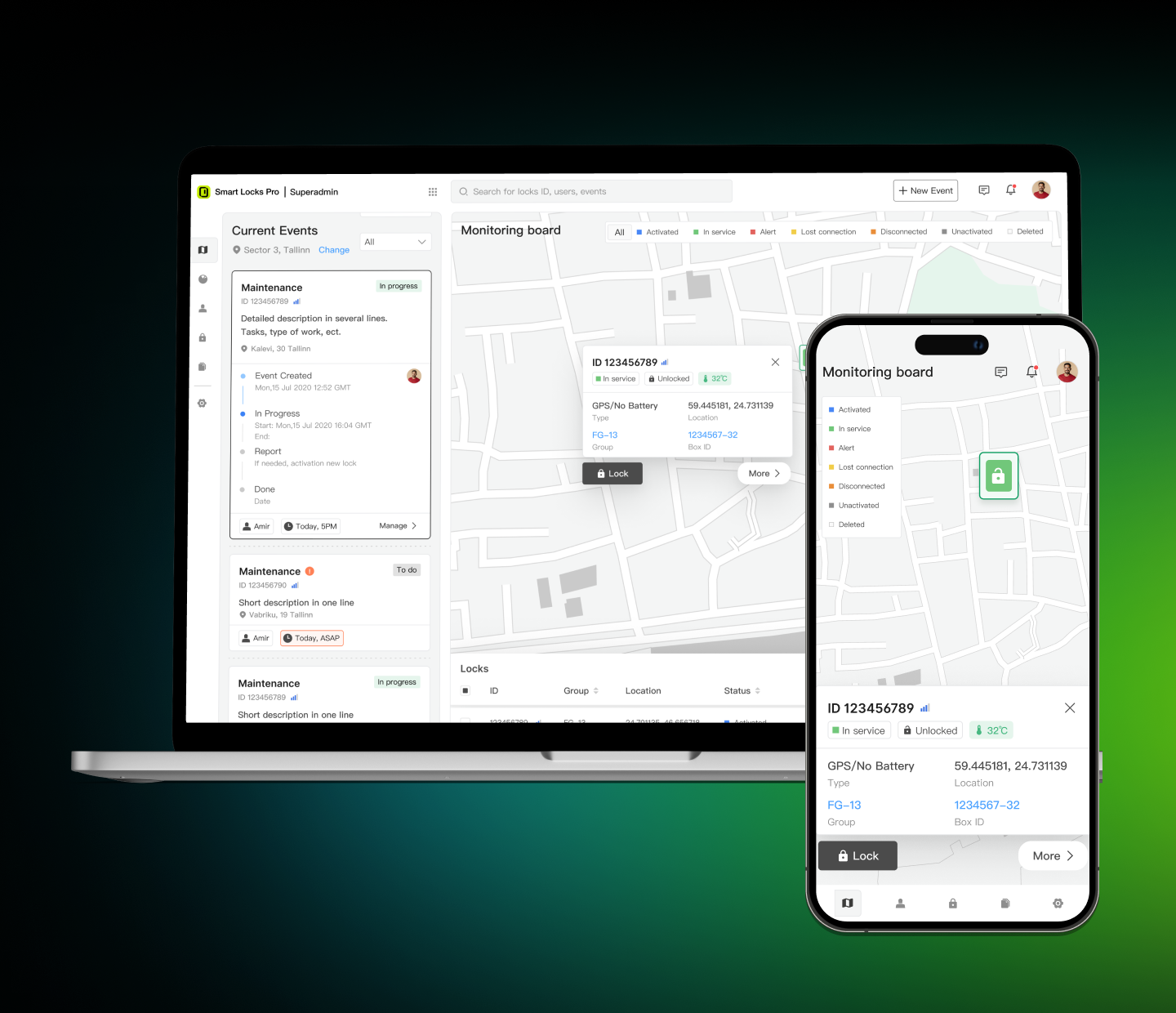
In energy and utility, one of the main challenges is providing the safety of distributed facilities such as electrical cabinets and industrial buildings. Traditional physical key-based systems pose a number of risks, including key loss, prolonged access control, and vulnerabilities when using master keys.
Smart Locks Pro offers an IoT-based solution – a digital access control system that consists of smart locks, a mobile app, and a centralized monitoring platform via NB-IoT. Users can control access remotely, monitor events in real time, and integrate with environmental sensors such as temperature, smoke, and water. At the same time, Bluetooth support guarantees operation even without an Internet connection.
With Smart Locks Pro, organizations receive a higher level of facility security and centralized control over access events and asset status.
What successful IoT implementations have in common
Looking across these examples, a few patterns stand out.
1. They start with a specific problem
The Volvo AGV battery failure, the DHL shipment condition gap, the Walmart stockout problem – each implementation began with a clearly defined operational pain point. This is a problem-first approach that reduces the risk of building expensive proof-of-concepts that never scale.
2. They use data to replace guesswork
Collecting sensor readings alone does not create much value unless organizations can act on its insights quickly. As was seen in previous examples:
- machine anomalies trigger maintenance before failure
- shelf sensors flag restocking before shelves empty
- soil moisture readings adjust irrigation schedules
- shipment monitoring enables intervention before cargo risk rises
- patient respiratory changes trigger alerts before critical deterioration.
Besides the fact that the system simply reports what is happening, it also helps the teams decide what to do next.
3. They scale from an existing foundation
The most effective deployments support how businesses already work instead of creating disconnected dashboards nobody uses.
4. Technology is rarely the hard part
Sensors, connectivity, and cloud platforms are already mature. Some of the more demanding challenges include integrating new data streams into existing workflows, building organizational habits around the insights, and maintaining systems across years rather than quarters.
5. They use IoT as a foundation for new business models
SMC was a good example. The company added monitoring and analytics to its pneumatic equipment, moved beyond simply selling hardware, and started offering data-driven digital services.
In these cases, IoT drives new ways to create value.
For a deeper look at the obstacles organizations face when scaling IoT and practical ways to address them see our previous article on IoT challenges and implementation strategies.
Conclusion
The examples presented across manufacturing, healthcare, retail, logistics, and agriculture illustrate a clear principle: while IoT technology itself is largely uniform, the value it delivers is defined by the problems it addresses and the objectives it supports.
Over the past years, Bamboo Agile has provided IoT implementation services to organizations across sectors. Whatever your IoT challenge or goal, we have probably ‘been there, done that’, and know how to deliver real value.