
In 2026, the energy landscape continues to be defined by the processes of transformation and innovation. Solutions powered by AI, digital twins, smart grids, and advanced data analytics are opening the path to a more efficient and sustainable use of energy.
In this blog article, Bamboo Agile experts look at the top energy advancements and spotlight the latest trends that are essential to follow if you aim to be at the industry forefront.
The state of the energy software market in 2026: Size, growth, and key players
Numbers make the case better than any pitch deck. According to Market Reports World, the global energy software market sits at roughly $16.3 billion in 2026 and is on track to reach about $33.4 billion by 2035. A wider outlook to energy management software specifically shows even bigger numbers – the market stands at $45.59 Billion in 2026 and is projected to eventually reach $108.7 billion by 2035 (Business Research Insights, 2026).
What is pushing the spending? In its latest Electricity Mid-Year Update, the International Energy Agency (IEA) forecasts that global electricity demand will grow by 3.6% in 2026 – and by a further 3.8% in 2027. In 2025, the number was 3%. That kind of demand growth is exactly why so much capital is chasing innovative energy solutions right now – utilities and operators alike need software that can keep pace with a grid under mounting strain.
On the vendor side, the energy management field splits into two camps. Established industrial players – Schneider Electric, ABB, Honeywell, and Johnson Controls – dominate the enterprise segment because they sell energy management software as part of broader industrial-automation portfolios, which gives them the deepest equipment integration.
Newer, software-native vendors compete on a different axis. Many of them have emerged from the energy IoT and cloud side of the industry rather than from a single vendor’s hardware ecosystem. They usually trade deep equipment lock-in for faster rollout and broader sensor compatibility, as well as pricing built for mid-market budgets. The scale of this second camp is considerable. Verdantix’s research from 2024 provides an analysis of 76 vendors that offer energy management software, a roster that spans names like 75F, Acuity, CIM, KODE Labs, Metrikus, and Verdigris alongside more established players.
Energy software market 2026 in a nutshell
| Category | Data point |
| Global energy software market (2026) | $16.3 billion |
| Energy management software market (2026) | $45.59 billion |
| Global electricity demand growth (2026 forecast) | 3.6% |
| Established industrial vendors | Schneider Electric, ABB, Honeywell, Johnson Controls |
| Software-native/newer vendors | 75F, Acuity, CIM, KODE Labs, Metrikus, Verdigris |
Energy software trends in 2026
From solutions for data analysis based on AI to digital twins for complex global asset digitization initiatives, these are the energy software trends for 2026.
Data management and analytics
In a time when data is worth just as much as oil, energy businesses are using analytics and data management to increase the pace of their operations. Analytic tools are important for overseeing everything, from the integration of renewable energy sources to grid operations.
Predictive maintenance
This is a trend that never goes out of style in the energy industry. It helps prevent downtime, extend asset lifespan, and maximize the use of maintenance resources.
In 2026, Eaton, an American-Irish multinational power management company, introduced a motor analytics software solution for mining, oil and gas, and manufacturing. The solution detects equipment issues earlier and more accurately than existing tools and requires no extra sensors or hardware on the motor.
Eaton motor analytics uses current signature analysis and machine learning to predict common motor and pump problems months ahead. As a result, maintenance teams can prioritize repairs and cut unplanned downtime. The software also flags inefficient motors, so facilities can target maintenance for better energy use.

Another prominent example of the use of predictive maintenance in the energy industry is Aramco’s Metabrain AI. It is the world’s first industrial generative artificial intelligence model, which was developed by Aramco to make predictions or generate outputs. Metabrain AI has 250 billion parameters, or learnable variables, and was trained on 7 trillion data points gathered over Aramco’s 90-year history.
Financial and business data analysis
From identifying energy waste to planning investments, financial data analytics and energy software are an efficiency-boosting combination for businesses in the energy sector.
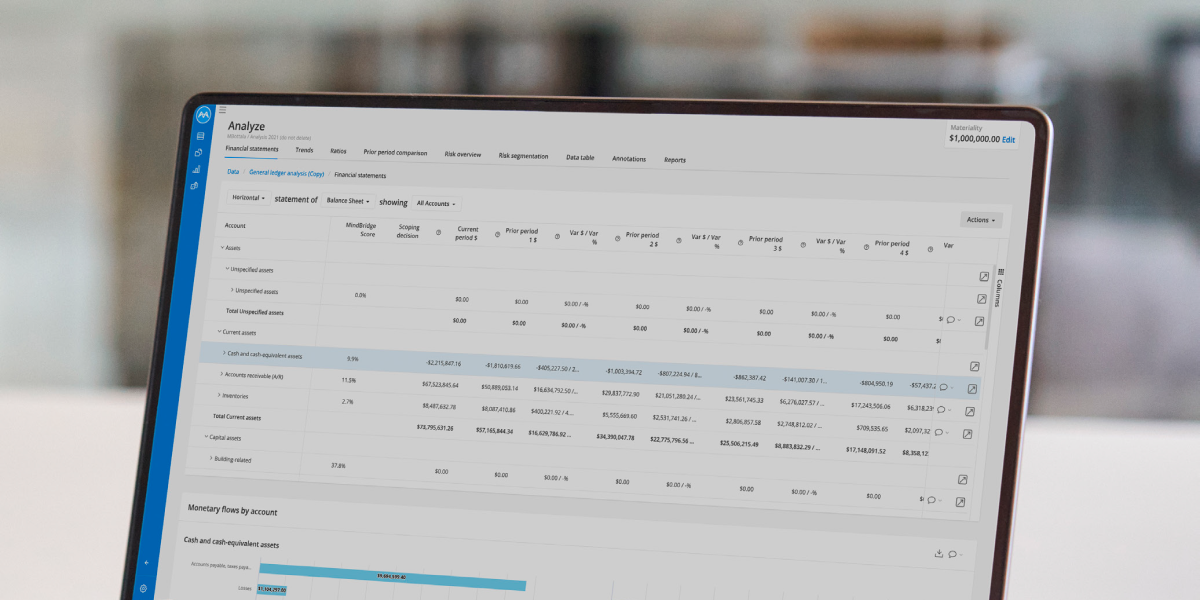
Large-scale market player Chevron partnered with MindBridge, an AI company, to bring to life a financial transaction risk analytics system. Chevron’s goal was to address its various data analytics challenges in one software system, and MindBridge delivered a multifunctional platform that Chevron can use in the general ledger analysis, receivables, payables, payroll, and vendor invoice analytics.
In 2025, MindBridge mentioned the partnership in one of its blog entries, noting that “With the platform, they (Chevron – editor’s note) analyzed 30 to 40 million rows for one business unit. This process would’ve normally taken months but was now accomplished in a matter of days, significantly improving efficiency and productivity while reducing financial risks.”
Subsurface data analysis
Subsurface data analysis systems offer a profound comprehension of the subsurface of the earth through the processing of intricate geological data, such as seismic surveys and well logs.
Among the examples of such solutions is the recent technology collaboration between SLB and NVIDIA. The partnership helps energy companies convert large volumes of operational data from subsurface, production, and infrastructure into actionable insights. SLB will serve as the modular design partner for NVIDIA DSX AI factories, with offsite component manufacturing that cuts costs, reduces lead times, and allows rapid data center scaling. The two companies will also develop an AI Factory for Energy, a reference environment running on SLB’s digital platforms, and optimize SLB’s platforms with NVIDIA AI infrastructure to process large datasets more efficiently.

Equinor, an international energy company, relies on precise data models in its operations. However, maintaining these models up to date for different projects required a lot of work and was prone to mistakes. To address this, Equinor created Webviz, a web-based tool that makes data processing and visualization easier. Engineers can work together more effectively and generate personalized dashboards with Webviz, which improves decision-making. Due to the platform’s success, it has expanded into carbon capture and wind farm projects, demonstrating its adaptability and potential for more uses.
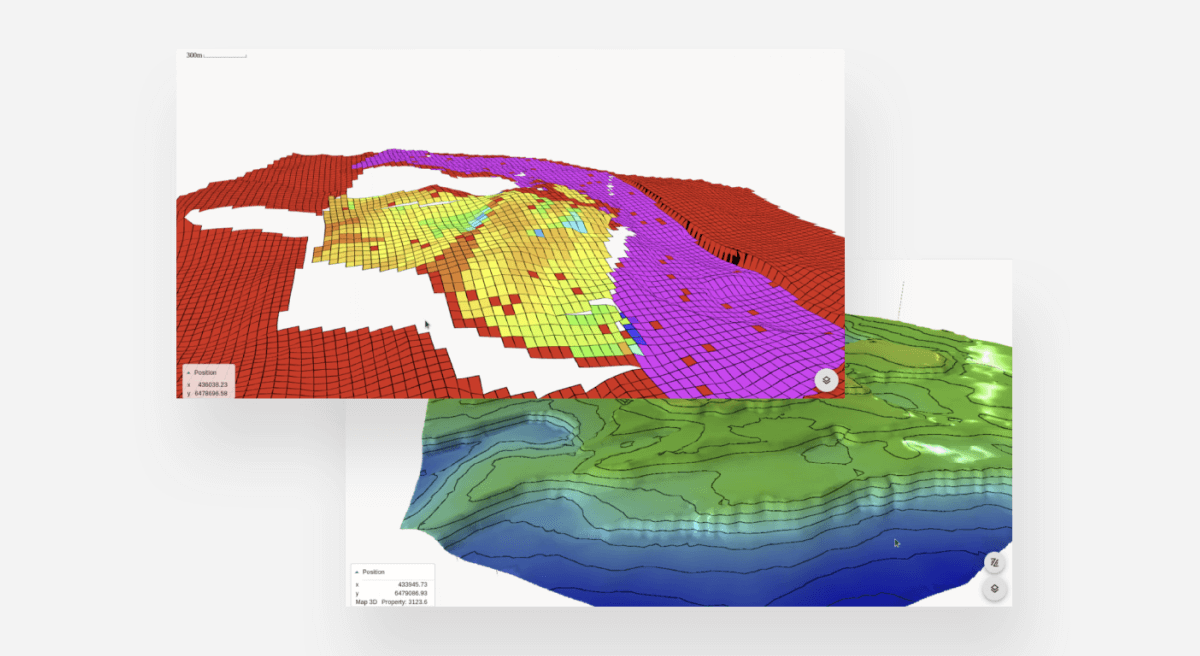
Equinor is no stranger to introducing innovative technologies to its business operations. In a move to streamline subsurface data management, Equinor selected Halliburton’s Landmark DecisionSpace Geosciences suite and OpenWorks as its standard geoscience tools. This decision creates a unified platform for geoscientists to collaborate across projects and share expertise. By consolidating data in OpenWorks, Equinor gains improved accessibility, quality control, and a smoother transition to cloud-based operations.
Last but not least is Bluware’s deep learning tool Pickasso for Shell. To increase the speed and precision of seismic data analysis throughout its global energy operations, Shell is utilizing Bluware’s seismic interpretation technology to a larger extent. In particular, Pickasso’s real-time learning capabilities improve subsurface understanding of Shell’s green energy efforts, such as carbon capture and storage, as well as traditional oil and gas development. In 2023, Bluware was acquired by Computer Modelling Group (CMG).
Market data analytics tools
Innovations in the energy software industry include market data analytics tools. They offer valuable insights to companies by analyzing large datasets on energy pricing, weather trends, and consumer behavior. All of this lowers costs and increases efficiency throughout the energy ecosystem.
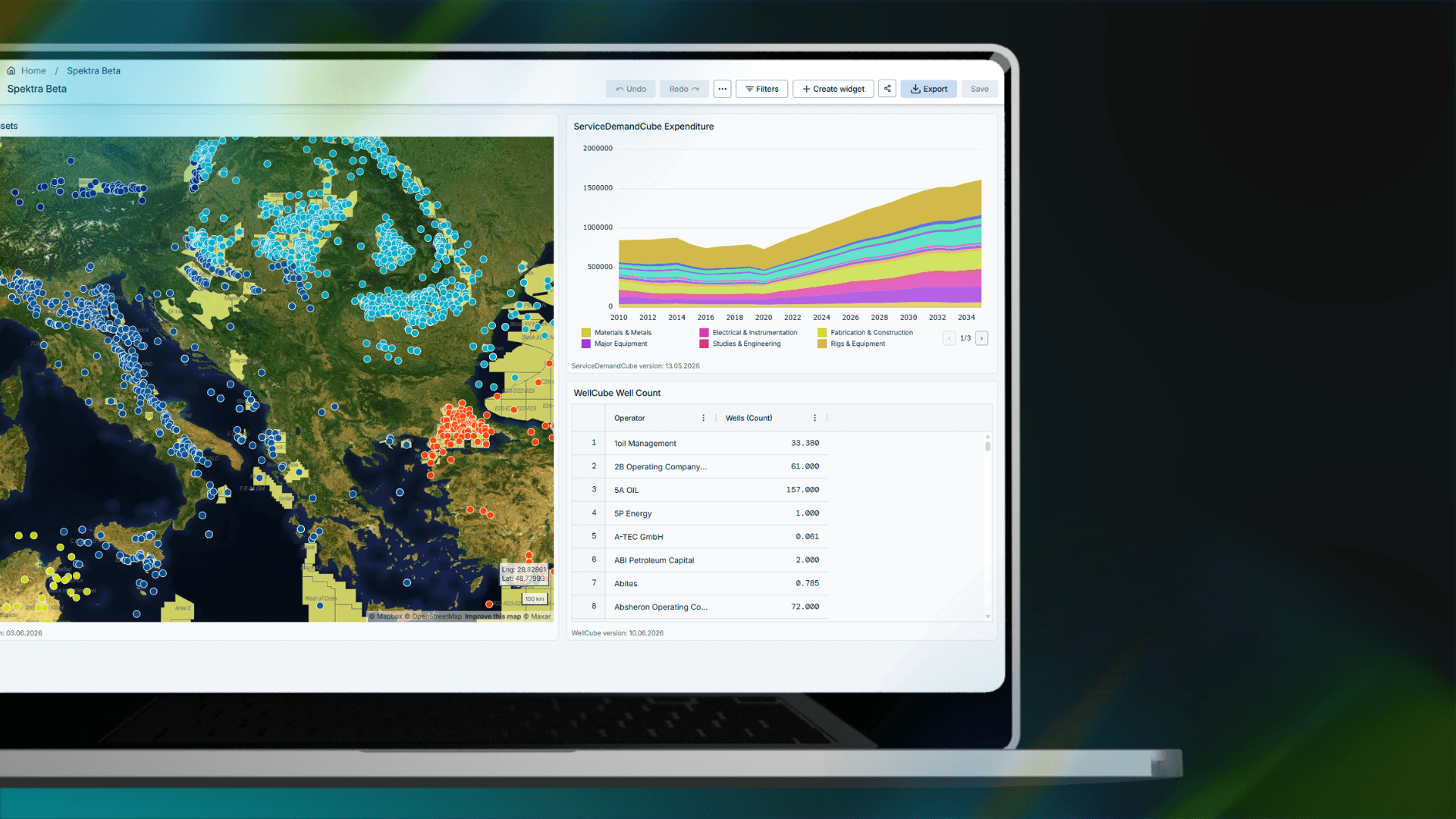
Rystad Energy, a leading independent energy intelligence company from Norway, announced the launch of Spektra, an AI-native platform that lets energy professionals access, analyze, and share energy data, bringing every Rystad Energy dataset into a single collaborative workspace. The beta launched in June 2026, with full commercial launch set for August 2026 at Rystad Energy Innovate. The platform ships with MCP connectors, an API gateway, and a conversational AI tool called AskRystad for natural-language queries.
Carbon and waste data management
Managing waste and carbon data opens the door to a more environmentally friendly future. Software systems can track and analyze this data to identify areas of inefficiency in power generation and consumption. This gives businesses the ability to use resources more efficiently, rely less on fossil fuels, and produce less waste.
ExxonMobil says it started its first commercial carbon capture and storage (CCS) operation in 2025 and is pursuing a Low Carbon Data Center project in 2026, which is relevant because it connects industrial energy systems, carbon accounting, and software-enabled infrastructure planning.
The utility company ENGIE paired up with EcoOnline to completely revamp the way the company measured its carbon footprint. Its solution, Info Exchange, replaced the old internal reporting system based on SharePoint. By gathering centralized data from each of the 1,400 ENGIE facilities, Info Exchange supports initiatives in waste management, compliance reporting, and carbon footprint reduction.
Digital twin
Digital twins are transforming the energy software market by modeling physical assets and operations virtually. Real-time data from sensors and other sources is incorporated into these virtual models, which enables improved comprehension and efficiency of energy systems.
This is yet another energy software trend adopted by the industry giant Chevron. It invited Kongsberg Digital, a Norwegian software company, to digitize its global assets using the digital twin technology. Chevron will benefit from it in terms of project execution and work planning. Additionally, the digital twin will speed up troubleshooting, cut expenses, improve decision-making, and lessen the danger to process and personal safety.
Kongsberg Digital and Chevron jointly showcased integrated simulation and digital twin modeling at ADIPEC 2025, using the Tahiti subsea Gulf of Mexico case study to address water hammer and depressurization in water-injection systems.
ENGIE has jumped on the digital twin train as well, collaborating with PTC, a US-based software and digital transformation expert, on the development of a virtual furnace that functions in real time. According to ENGIE, they had difficulty with replacing industrial equipment – these are large, complicated machinery, and changing a furnace is not as simple as changing a car. As a result, they needed a way to verify and adjust how large machinery and equipment are set up, and the company determined that a digital twin could be able to help.

Moreover, at CES 2026, Siemens announced Digital Twin Composer, a tool that merges high-fidelity digital twins with real-time engineering data. Operators can simulate facility modifications, environmental conditions, and operational changes before executing them. The software targets large-scale infrastructure such as energy facilities, pipelines, and industrial plants, where capital efficiency and risk reduction carry high importance.
Energy management systems (+AI in energy management)
Energy management systems (EMS) aid companies in cost savings through identified inefficiencies, predictive maintenance to reduce downtime, and participation in demand-response programs. Furthermore, companies introduce AI to their energy management software to help integrate renewable energy sources and optimize energy use for better sustainability. This ultimately transforms EMS into powerful tools for a more efficient and sustainable future.
Look at Eaton, for instance. In March 2026, the company that is known for renewable energy innovations launched Brightlayer Energy, an AI-powered energy management and optimization system for buildings. Eaton says pilot deployments in Europe and North America showed measurable savings, including a hotel in Amsterdam cutting electricity costs by more than 25% and emissions by 27%, plus a warehouse in South Carolina saving 17% on energy costs overall.
Another strong example is Johnson Controls. In April 2026, the conglomerate acquired Nantum AI to strengthen its OpenBlue platform with HVAC optimization and real-time airflow management capabilities, aimed at improving building energy performance. This is a showcase of AI being embedded into a major enterprise energy-management stack rather than offered as a standalone tool.
Methane management
When it comes to managing methane, energy software can be quite beneficial. The software detects leaks and inefficiencies in real time by continuously monitoring various processes and equipment used in natural gas operations. As a result, methane leakage into the atmosphere is reduced and repairs and modifications may be made more quickly.
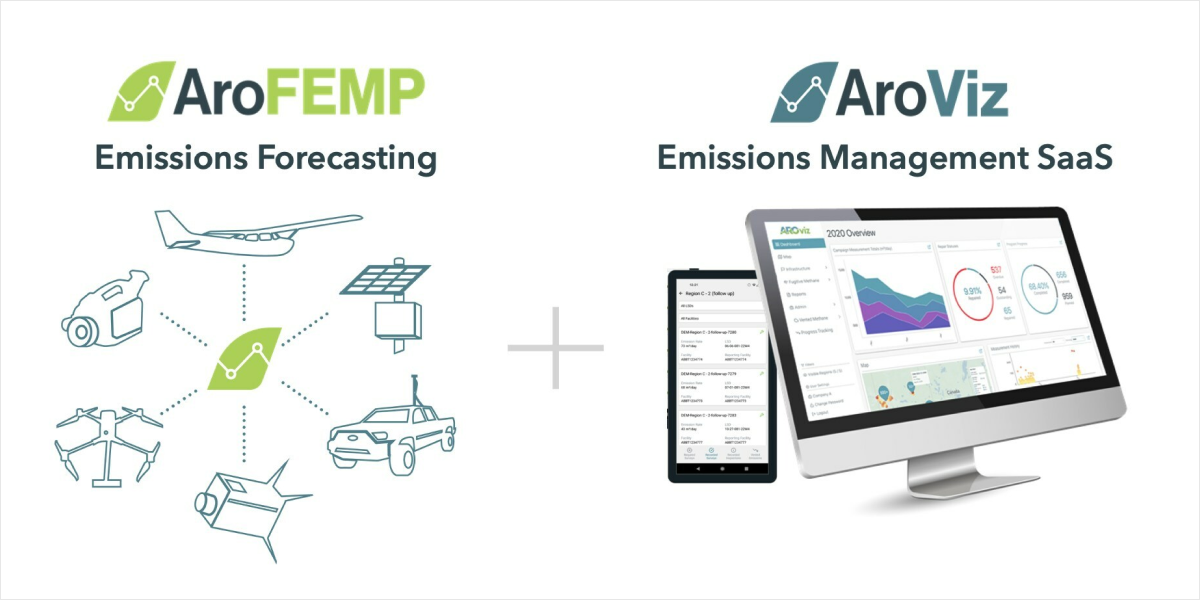
This is where Chevron steps up once again. The energy behemoth supports companies that develop technologies advantageous to the energy industry through its Chevron Technology Ventures (CTV) Catalyst Program. Arolytics, a company that creates emissions software for the oil and gas industry, was accepted into CTV to develop tools for methane emissions management. Shortly after joining the Catalyst Program, Arolytics raised $3.5 million in funding.
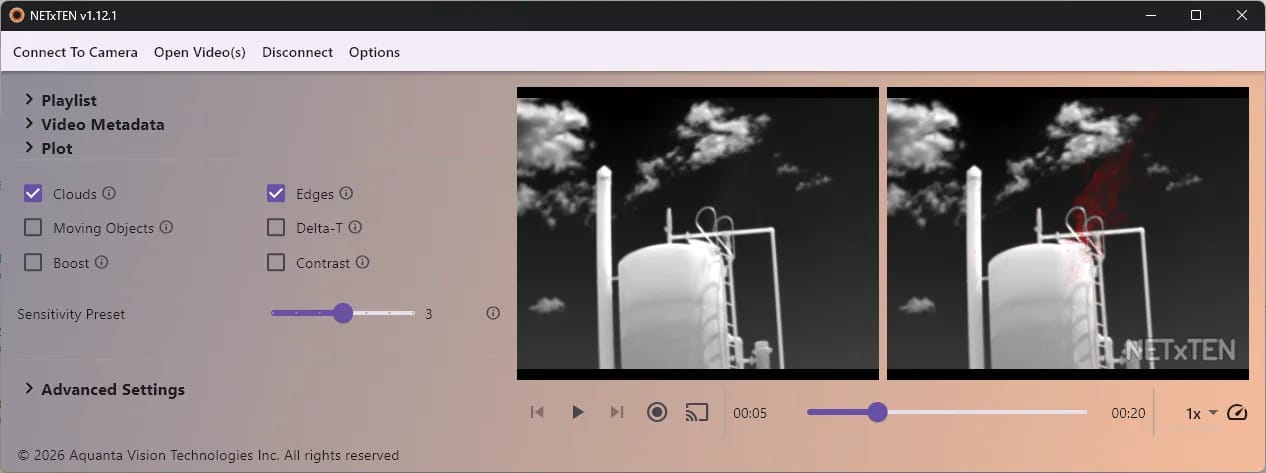
In addition, Chevron and the National Renewable Energy Laboratory help entrepreneurs commercialize lower-carbon university/lab technologies through Chevron Studio. It is a Houston-based program that pairs entrepreneurs with technology to help them launch their businesses. One of the companies that were invited to participate in the Chevron Studio scale-up stage is Aquanta Vision. It is a climate tech company that employs computer vision to automate the identification of methane in optical gas imaging, or OGI. The technology from Aquanta works with all OGI cameras and does not require any human involvement.
Aquanta Vision’s reach has expanded beyond Chevron Studio – the company has also participated in Rose Rock Bridge, Shell GameChanger, and the Innosphere industrial tech accelerator program, and has received multiple grants and awards.
NETxTEN by Aquanta Vision
Smart infrastructure
Energy software is the brain of smart infrastructure. It converts sensor data from grids and transit systems, as well as buildings into insights that can be put to use. This enables the tracking of energy consumption in real time and identifies inefficiencies.
An automated system may, for example, detect buildings that use too much illumination at night and change the settings accordingly. To lessen the burden on the grid during peak hours, the software can also forecast energy demands and improve its distribution.
Charging and gas stations
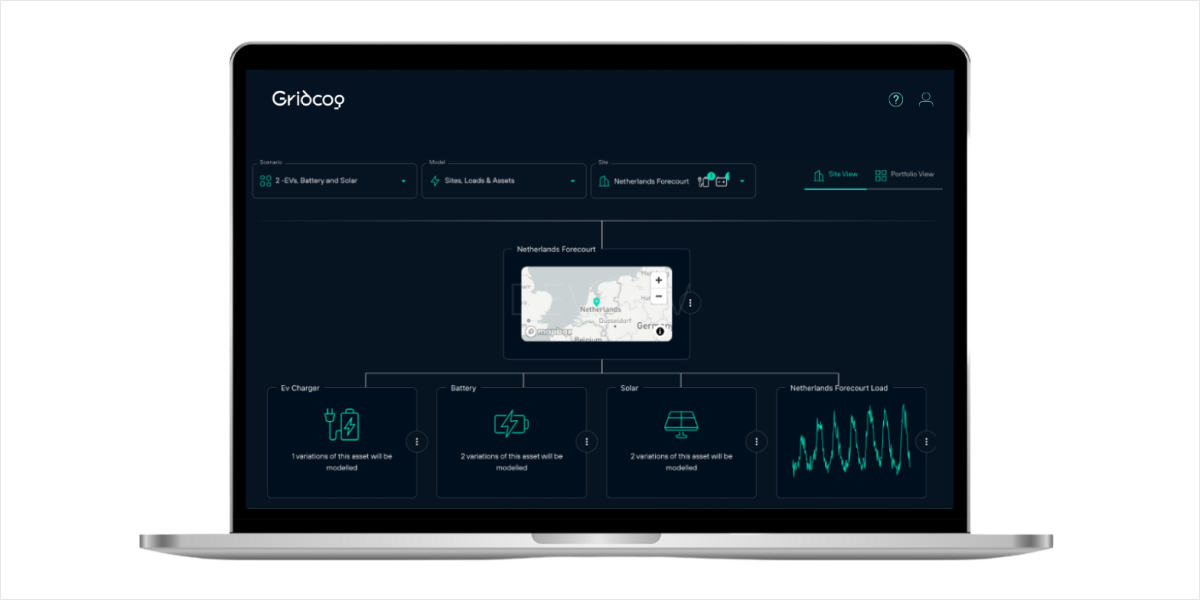
Vehicle electrification is essential for energy transition and cutting emissions. Nevertheless, it also presents difficulties for companies like Shell that have to navigate the transition. To solve this problem, Shell is utilizing Gridcog’s software. The collaboration aims at providing innovative energy solutions, like arranging fast chargers and battery storage at forecourts in a strategic manner, as well as investigating new revenue streams for fleets by maximizing energy use during off-peak hours. In Europe, this partnership between Gridcog and Shell is a big step in the direction of cleaner energy.
By July 2026, the Gridcog’s platform has modeled more than 16,000 energy projects across more than 40 countries. Also in July 2026, the London-based company just closed a major new funding round – a $10 million Series A led by ABB, with participation from Axpo, DNV Ventures, and VERBUND X Ventures.
Another notable project is ENGIE Vianeo and Sitetracker. ENGIE Vianeo, a leader in the installation of electric vehicle charging stations in France, has selected Sitetracker’s software to oversee its expanding global network of stations.
ENGIE Vianeo has rapidly deployed and operates an extensive network of charging stations across France and Belgium, with plans to expand further into Europe – particularly Italy, Germany, and Spain. Within its first year, the company deployed 400 charging stations (800 charge points) across 64 highway service stations.
Vehicle-to-grid
Electric car batteries are able to recharge and return energy to appropriate power systems thanks to a technique known as vehicle-to-grid, or V2G. Essentially, this smart charging technology makes it possible for automobile batteries to function as energy storage devices within the electrical grid, much like a power plant, and supply homes and businesses with electricity as needed.
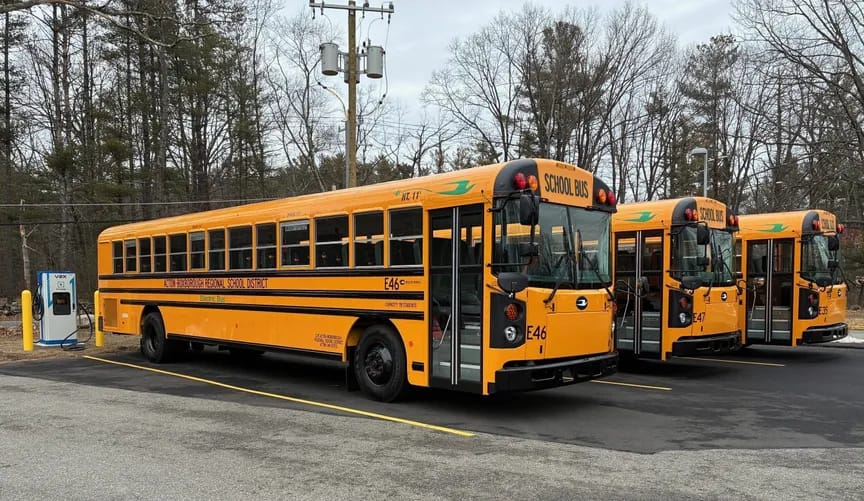
In summer 2026, three electric school buses in Acton-Boxborough, Massachusetts, are set to start the state’s vehicle-to-grid pilot program. They will charge overnight and send stored power back to the grid during peak hours from 4PM to 7PM The district will earn revenue for that shared power, potentially covering the buses’ charging costs for the school year.
Bidirectional chargers let these vehicles return battery energy to buildings or the grid. Such an approach can lower emissions and cut electricity bills for participants – and hold down grid prices for everyone.
High costs, technical complexity, incompatible equipment, and unclear compensation plans have slowed wider adoption so far. The Massachusetts Clean Energy Center awarded up to 100 bidirectional chargers to five school districts, four municipalities, and thirty residents across a range of locations and utility territories, pairing six charger types with eight vehicle models to test system performance under varied conditions.
Energy trading
Energy software automates time-consuming operations such as data entry and trade execution, which lets traders focus on strategy and analysis.
Ørsted, a clean energy leader, chose PCI Energy Solutions to deploy its Energy Trading and Risk Management (ETRM) software. The collaboration is aimed at expediting Ørsted’s trading operations for FTRs (financial transmission rights), OTC (over-the-counter) trades, exchange trades, and wholesale multi-market ‘bid-to-bill’ features. In 2025, Ørsted successfully went live with the ETRM platform in the U.S., automating bidding, scheduling, and settlements across multiple markets. The company expanded its footprint in the United States, since the platform allowed Ørsted to enhance scale, portfolio visibility, and workflow efficiency.
In Europe, Ørsted selected Previse Systems to modernize their energy trading platform. Previse Systems’ product, Previse Coral, was an excellent fit for a cloud-based system to effectively manage Ørsted’s electricity and gas trading operations. The system will automate deal capturing, workflows, and back-office procedures throughout Ørsted’s European trading operations. Additionally, it is adaptable enough to manage Ørsted’s wide range of energy products, which includes fuels and metals.
Since then, Previse Systems has kept winning similar deals with other European energy players, suggesting the platform’s momentum has continued. For instance, in 2024, Syneco Trading GmbH, a Munich-based municipal energy procurement company, selected Previse Systems for its ETRM solution.
Renewable energy innovations
Energy software acts as the creative force behind renewable energy trends. There is an indefinite number of opportunities for its use in the industry. For example, wind farm operators can identify turbine problems before they result in expensive downtime when they use software such as remote monitoring systems.
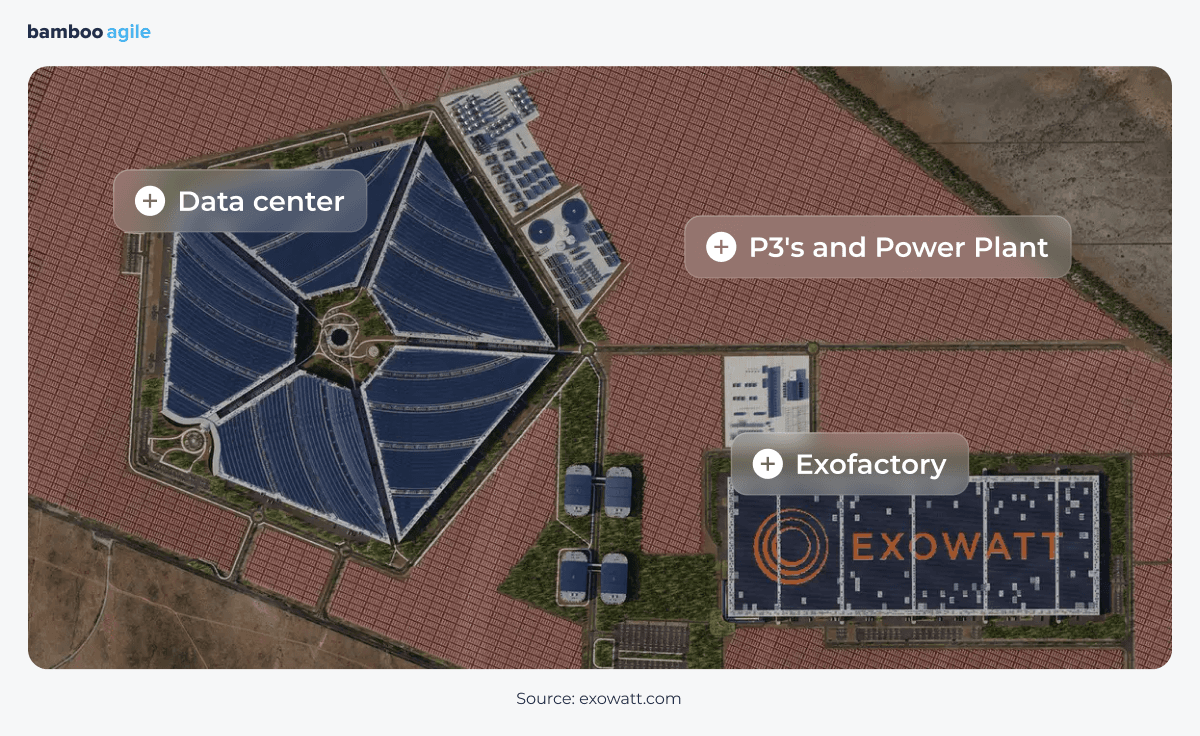
Energy companies make the use of green energy innovations their goal for the foreseeable future. Exowatt launched ExoRise, a new business arm that delivers powered land and energy infrastructure for hyperscale data centers. U.S. electricity demand has accelerated faster than at any time in two decades, driven largely by compute-intensive AI clusters. ExoRise combines land development with Exowatt’s P3 solar technology, which stores energy as heat and converts it to electricity on demand, and will locate projects in high-solar regions of the U.S. Southwest.
The company offers one of the most innovative energy solutions in the market, a turnkey product that reduces reliance on lengthy grid-interconnection timelines, with the first pilot project expected operational by the end of 2026. Exowatt raised $50 million in November 2025 to deploy its round-the-clock renewable energy technology near AI data centers and industrial sites across the U.S.
Bamboo Agile also has hands-on experience with the renewable energy trend.
One of our clients asked our team to create a business simulation game that teaches the fundamentals and dynamics of an offshore wind company. The game provides a chance to practice in a secure setting and gain knowledge from both one’s own and other people’s behaviors.
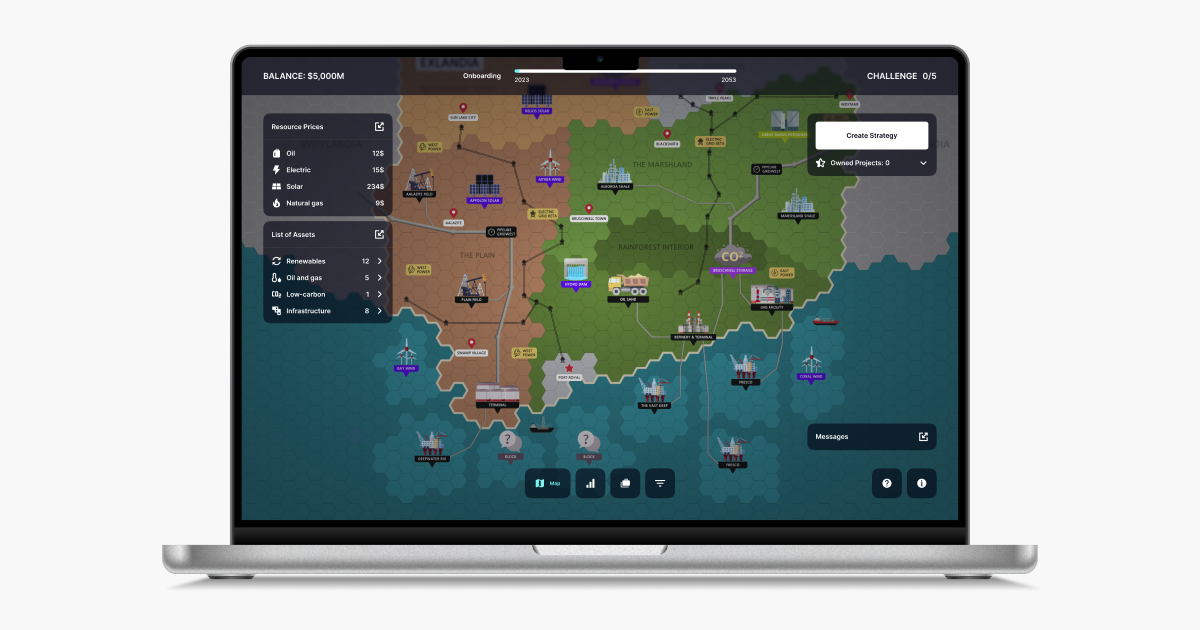
Overall, this year’s trending energy solutions use green energy innovations to create a more sustainable future.
How Bamboo Agile can help with innovations in the energy sector
Bamboo Agile helps energy companies innovate their processes through custom software development. We have over 20 years of experience in software development and can provide comprehensive services, from AI-powered EMS to smart city infrastructure solutions. Whether you are optimizing exploration and production or integrating renewable energy sources, Bamboo Agile is your perfect tech partner in fostering efficiency and sustainability.
Where the energy sector sits in 2026
In 2026, data analytics and AI in energy management are driving a plethora of innovations in the sector. Every aspect of it is changing thanks to energy software, from methane leak monitoring to smart grid management. Innovative energy solutions are opening the door to a more efficient and sustainable energy future, whether they are used to optimize energy trade or improve asset management.