Understanding pharma digital transformation and its importance
Digital transformation in pharma is accelerating, but industry leaders themselves are still cautious about how much value they’ve actually captured from that investment so far: in a January 2026 survey of US pharma and biotech tech executives, 57% expected strong returns from AI and analytics investment in the year ahead, while only 24% said they’d seen measurable value to date.
Still, that caution hasn’t slowed the spending. Big pharma’s investments in data analytics are still projected to reach $1.2 billion by 2030 (up 27%), while investment in cloud computing will make $62.39 billion by 2033. In 2025 global pharmaceutical R&D spending itself exceeded $190 billion, up 6.2% on the year before, and a growing share now going to manufacturing sciences and digital infrastructure.
Besides, AI has become a particularly visible piece of that spend – cumulative deal value across pharma-AI partnerships topped $18 billion across more than 120 transactions between 2022 and early 2026.
But as impressive as those numbers sound, McKinsey’s research shows that pharma companies are far from utilizing the full extent of digital technologies. Nevertheless, the enterprises that have successfully implemented digital solutions into their workflows have demonstrated incredible results: in some cases, a 20% improvement in product delivery speed, a 50% reduction in testing time, and a 50% increase in customer satisfaction.
However, many pharmaceutical companies find such numbers difficult to achieve – and there are reasons for that.
Common challenges for the industry
Rigid operating models
The pharmaceutical industry has been generally slow to adapt to change. The high number of regulations and the amount of necessary bureaucracy make it very difficult for companies to break away from established processes. So for a long time, digitalization has been seen as a costly endeavour, which leadership was hesitant to support.
That said, this issue has been mostly mitigated after the year 2020, with many businesses having to switch to more digitized operating models in a time of social distancing – and seeing the benefits of doing so. Even AstraZeneca’s own CEO has warned against the trap that comes with success: Pascal Soriot has said that “you have to continuously make sure people understand the need to innovate and perform,” since strong results can just as easily breed complacency as confidence.
Lack of high-quality data sources
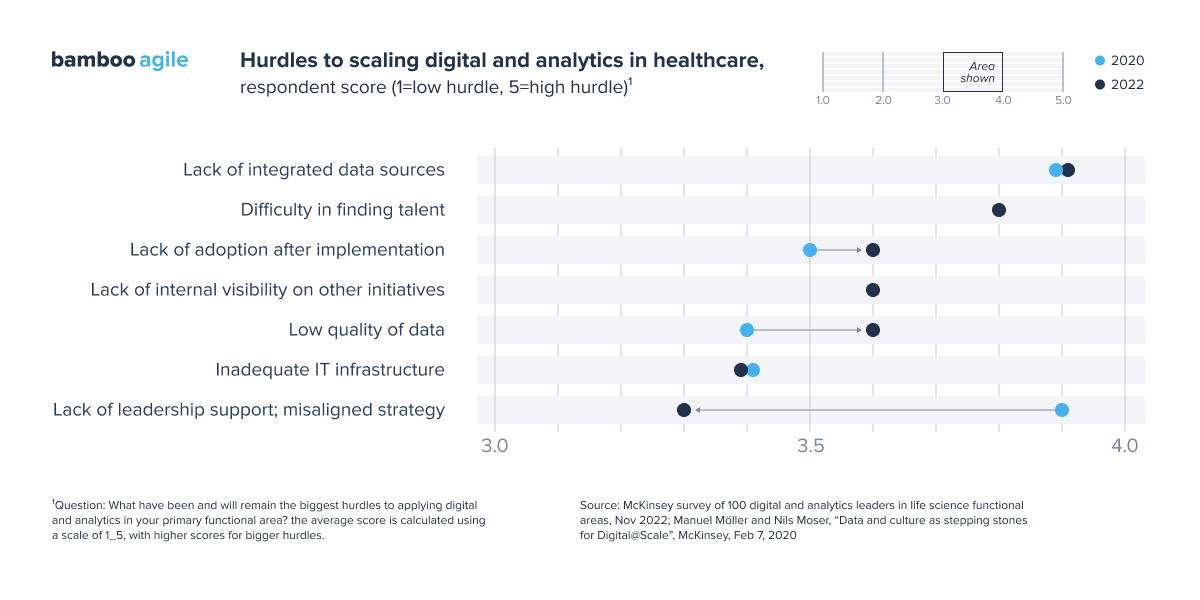
Pharma is experiencing a growing interest in digital data and analytics solutions, which is hindered by the lack of solid data sources. Identifying what data exists, getting timely access to it, monitoring it, and filtering out duplicates or siloed cases are all serious challenges. The CEO of Novartis Vas Narasimhan described the company’s own data science capability as “strong but scattered”.
So for now, many pharmaceutical businesses still rely on manual data processes, which makes fast decision making and advanced analytics nigh impossible. Standardized data algorithms need to emerge on a large scale before the industry can fully transition to more digital methods.
Lack of relevant talent
Successful implementation and scaling of digital transformation requires appropriate talent. Despite the fact that pharmaceutical businesses can offer compelling projects and competitive salaries, they struggle to attract and retain the necessary tech talent.
Companies need to reshape their hiring and retention efforts. Some of the most commonly suggested strategies include “win rooms” and hiring by acquisition – the latter can be especially effective in closing skill gaps in data science, design, product management, AI expertise, and other aspects of pharmaceutical software development.
Lack of adoption
Digital systems still haven’t been deployed on a large scale in many areas of pharmaceutics. Many companies are still developing PoCs without employing proper data analysis to measure actual business needs and the resources necessary to scale their solutions. And despite greater leadership support, a lot of businesses still lack the mindset to drive global adoption of new software.
Jared Josleyn from Sanofi has put the cultural side of that problem bluntly, asking colleagues, “when was the last time your team sat around and celebrated a failure?”. That was a pointed reminder that risk-averse habits, not just legacy technology, are often what block adoption.
Planning a digital transformation strategy in Pharmaceutics? Sign up for a free consultation with our specialists.
Pharma: digital trends
The challenges mentioned above aren’t absolute. Pharma has been experiencing a consistent rise in digital software adoption and development initiatives despite the drawbacks, with the biggest industry players exploring new avenues for transformation.
Our team has researched the main innovations coming from the sector’s biggest corporations (Sanofi, AstraZeneca, Novartis, Pfizer, Bristol Myers Squibb, etc.) in the past years. We’ve devised the following trends as a result.
Digital companion apps
Digital companions continue to prove their worth in complementing the use of medications, therapies, and medical devices. Starting 2020, both Software-as-a-Medical-Device solutions and standalone companions have been experiencing a steady growth of popularity.
SaaMD (Software as a Medical Device)
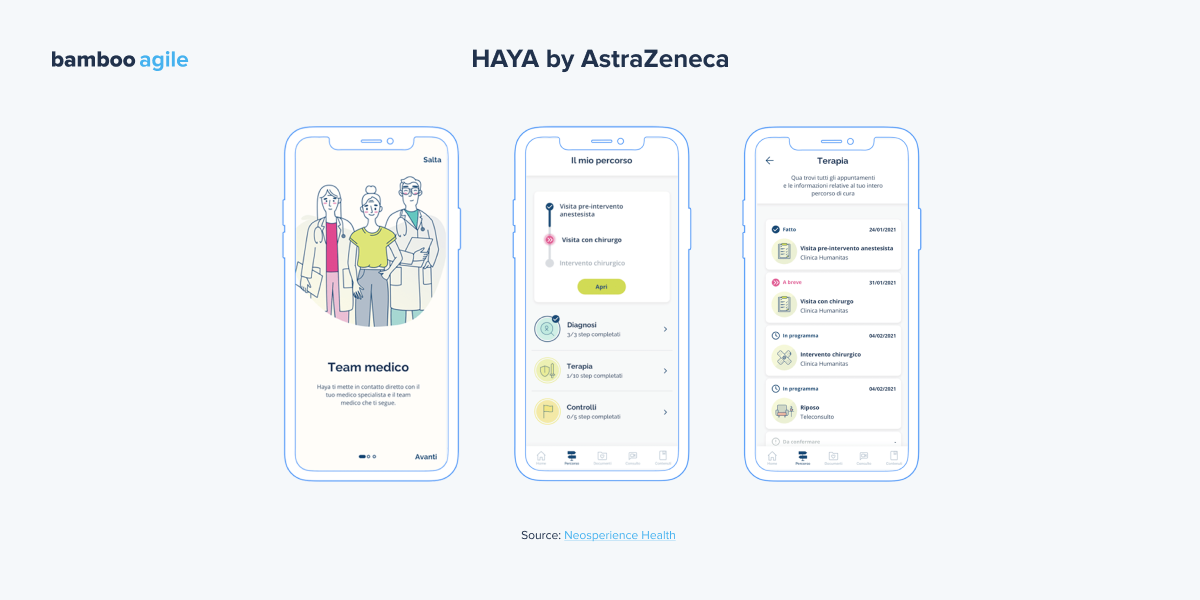
SaaMD has been particularly prominent in the pharmaceutical field. Only AstraZeneca has been developing multiple applications that fall under this category.
This includes their AI-assisted cancer patient support platform HAYA developed in tandem with Neosperience Health and the FINZI app that aids patients with unresectable stage 3 lung cancer, developed with IPG Health Frankfurt. Both solutions gather patient information, facilitate communication with doctors, and aim to alleviate fears during therapy.
Sanofi isn’t far behind, collaborating with BrightInsight to create a digital companion mobile app that will allow patients seamless access to such services as therapy and chronic disease management. The solution creates a connected and accessible medical ecosystem for patients via integrations with third-party services.
And just earlier this year, Roche and Startup Creashere revealed their cobas® pulse platform, which integrates third-party digital health apps to aid in clinical decisions, getting digital biomarkers, and vitals measurement.
Standalone companions
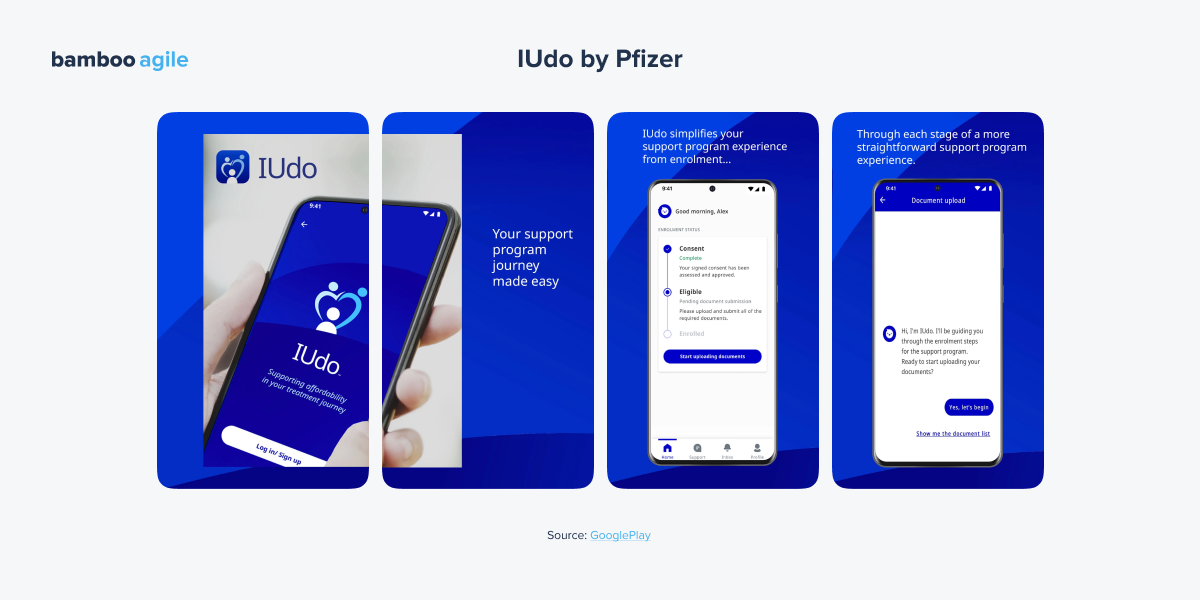
Standalone companions (therapy support apps, quiz-based apps, medication access apps, etc.) are experiencing a similar rise in popularity.
Standalone companion and patient-access apps have moved well past the quiz-and-reminder stage. Pfizer’s PfizerForAll platform bundles same-day telehealth appointments, vaccine booking, at-home prescription delivery, and savings and support programs into a single end-to-end experience covering conditions like migraine, COVID-19, and flu.
Roche’s Retinora app (in partnership with Temedica) takes a narrower, condition-specific approach, supporting patients with macular diseases through appointment scheduling, disease education, and planned accessibility features.
Direct-to-consumer platforms
A newer variant of the patient-access trend emerged in the final months of 2025: pharma companies selling directly to patients online, bypassing traditional insurance and pharmacy channels.
In October 2025, AstraZeneca launched AstraZeneca Direct, an online platform offering eligible US patients cash prices up to 70% off list price on medications like Farxiga and Airsupra, with home delivery. The launch came within days of Bristol Myers Squibb expanding its own direct-to-consumer offering for the autoimmune drug Sotyktu, and Novo Nordisk doing the same for Wegovy.
More specific AI use cases in pharma
The current AI boom has only boosted the technology’s adoption across various verticals.
For example, in pharma, AI-based predictive modeling has been widely used to analyze complex datasets and make predictions in drug discovery, development, and other processes for years.
Disease prediction
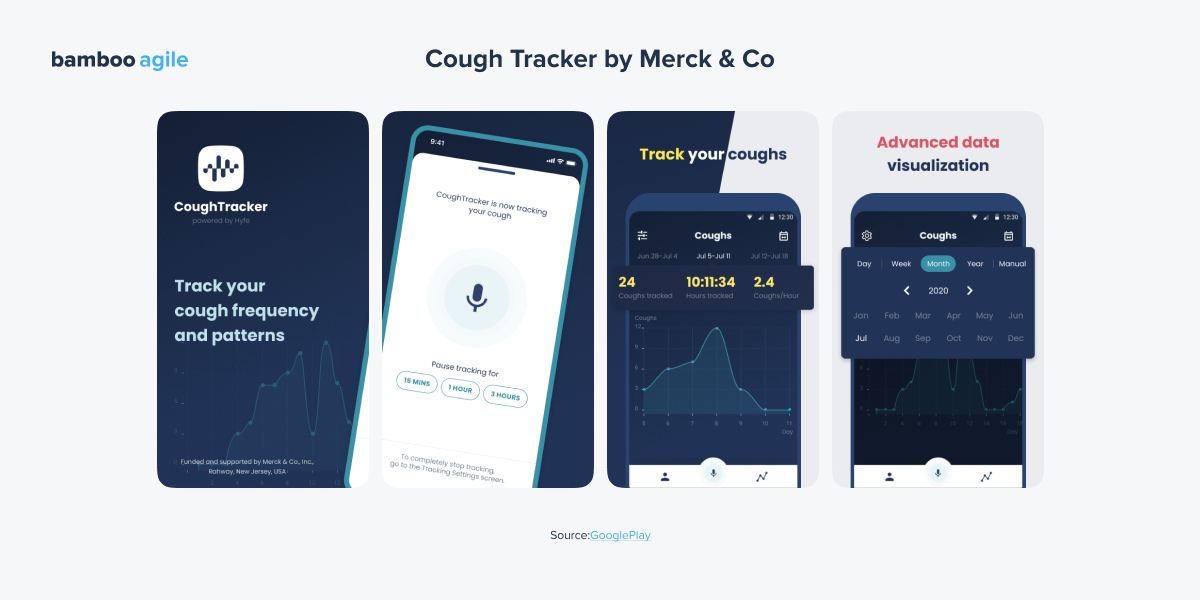
January 2026 alone brought a cluster of new pharma-AI platform deals aimed squarely at prediction. Thus, GSK partnered with Noetik to apply its AI platform to cancer clinical outcome prediction, one of three similar deals announced in the same week.
Drug discovery
The same wave of January 2026 deals extended into drug discovery itself. Pfizer partnered with Boltz to apply its AI platform to small molecule drug discovery, while Eli Lilly struck a separate deal with Chai Discovery for AI-driven biologics design, on top of Lilly’s existing Insilico Medicine and Nvidia commitments. As Chai co-founder Jack Dent put it, 2025 was “the year of breakthrough research,” and 2026 is shaping up to be “the year of deployment.”
Agentic AI adoption
2026 has been the year pharma moved from AI pilots to enterprise-scale agentic deployments backed by serious capital. In March, Eli Lilly and Insilico Medicine signed a partnership worth up to $2.75 billion, while Takeda struck a potential $1.7 billion collaboration with Iambic Therapeutics. AstraZeneca has expanded its existing Owkin partnership to put AI agents directly into development decisions, and Nvidia and Eli Lilly have opened a dedicated $1 billion joint AI laboratory.
Bristol Myers Squibb has taken a company-wide approach on a separate front, deploying Anthropic’s Claude to roughly 30,000 employees. In July, Ono Pharmaceutical partnered with Phylo to roll out its Biomni Lab platform across its drug discovery organization, aiming to automate how scientists synthesize a program’s experimental history and design its next experiment.
Merck has taken the hyperscaler route instead, entering a landmark partnership with Google Cloud in April to build out its AI-enabled digital backbone. Google reportedly is open to eventually making Merck’s resulting models available to other researchers.
Other solutions for operational workflow
Category management for procurement
Pharmaceutical companies keep seeking ways to optimize their procurement processes with smart technologies, and AstraZeneca’s rollout of Coupa is a strong example of what that looks like at scale.
The company’s legacy purchasing system had low adoption among its scientists and poor spend visibility, and the accounts payable team spent much of its time just answering payment-status questions. Since switching, AstraZeneca manages $10 billion in spend through the platform, with 97% of that spend properly structured and e-invoicing up 50%, freeing the AP team to focus on more strategic work instead of manual troubleshooting.
Digital twins in manufacturing
Digital twins have moved from pilot projects to production-scale infrastructure. Pfizer, Novartis, and GSK are among the companies now running facility-wide digital twins, with PAT-integrated implementations improving API consistency to 99.95%, cutting process variability by 55%, and reducing compliance incidents by 64%.
On the research side, a collaboration between Cambridge’s CARES center and A*STAR has produced an AI-driven digital twin platform for automated fault detection and predictive maintenance, now being commercialized for wider pharma use through the Pharma Innovation Programme Singapore consortium. So, digital twins pulling real-time production data into central systems are becoming one of the defining themes of pharma manufacturing conversations this year.
AR and VR implementation
Augmented reality has been seeing a lot of applications in R&D, manufacturing, sales, marketing, and patient engagement. For one, GSK’s Hemoglobe presented at ASN 2022 took full advantage of immersive tech, combining AR with 360-degree wraparound video for a one-of-a-kind dynamic experience.
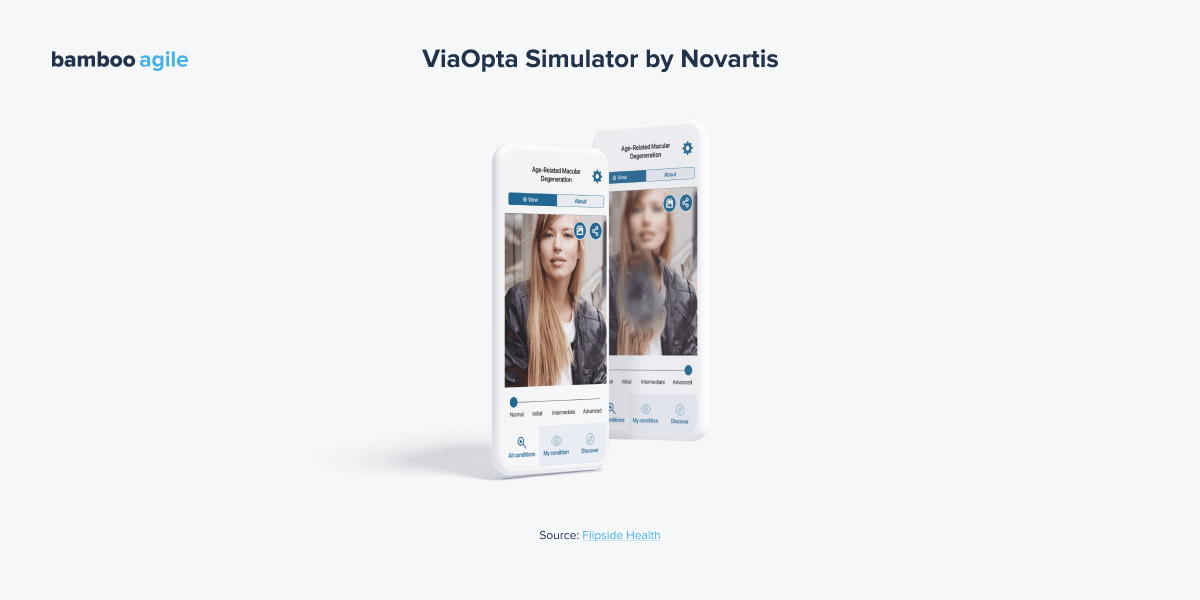
On the mobile side of things, Novartis and Flipside Health developed the ViaOpta Simulator app which utilizes AR to simulate visual impairments on a user’s smartphone screen. It’s a valuable tool for understanding the challenges visually impaired patients face.
The manufacturing side of AR has kept pace: VR-based training, which lets operators rehearse cleanroom procedures and equipment changeovers without production risk, is reported to cut operator errors by around 70% compared with traditional classroom instruction.Augmented reality has been seeing a lot of applications in R&D, manufacturing, sales, marketing, and patient engagement. For one, GSK’s Hemoglobe presented at ASN 2022 took full advantage of immersive tech, combining AR with 360-degree wraparound video for a one-of-a-kind dynamic experience.
On the mobile side of things, Novartis and Flipside Health developed the ViaOpta Simulator app which utilizes AR to simulate visual impairments on a user’s smartphone screen. It’s a valuable tool for understanding the challenges visually impaired patients face.
The manufacturing side of AR has kept pace: VR-based training, which lets operators rehearse cleanroom procedures and equipment changeovers without production risk, is reported to cut operator errors by around 70% compared with traditional classroom instruction.
Bamboo Agile’s expertise in digital pharmaceutical solutions
Liver Doctor for Sanofi
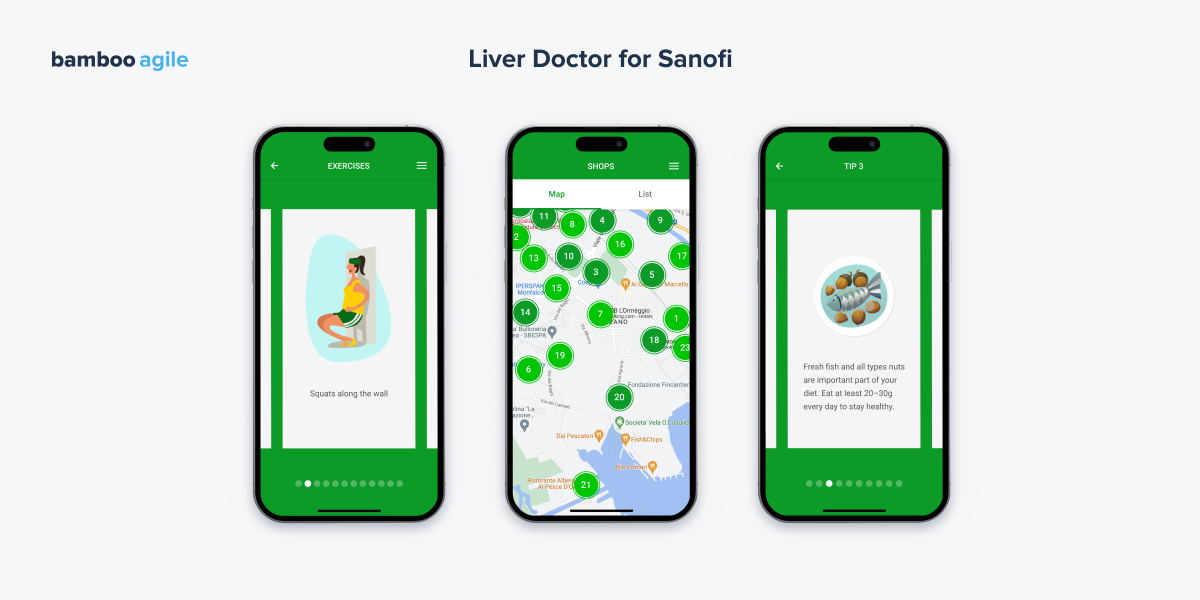
Sanofi turned to Bamboo Agile to develop a mobile application designed to encourage user involvement in monitoring the state of their liver, as well as to raise awareness of the Essentiale® Forte N medication.
The team delivered the Liver Doctor app that provided users with information covering a range of hepatological diseases and treatment methods with medical advice, diet and fitness tips, as well as the benefits and instructions for taking Essentiale® Forte N.
Telehealth App with medication delivery functionality
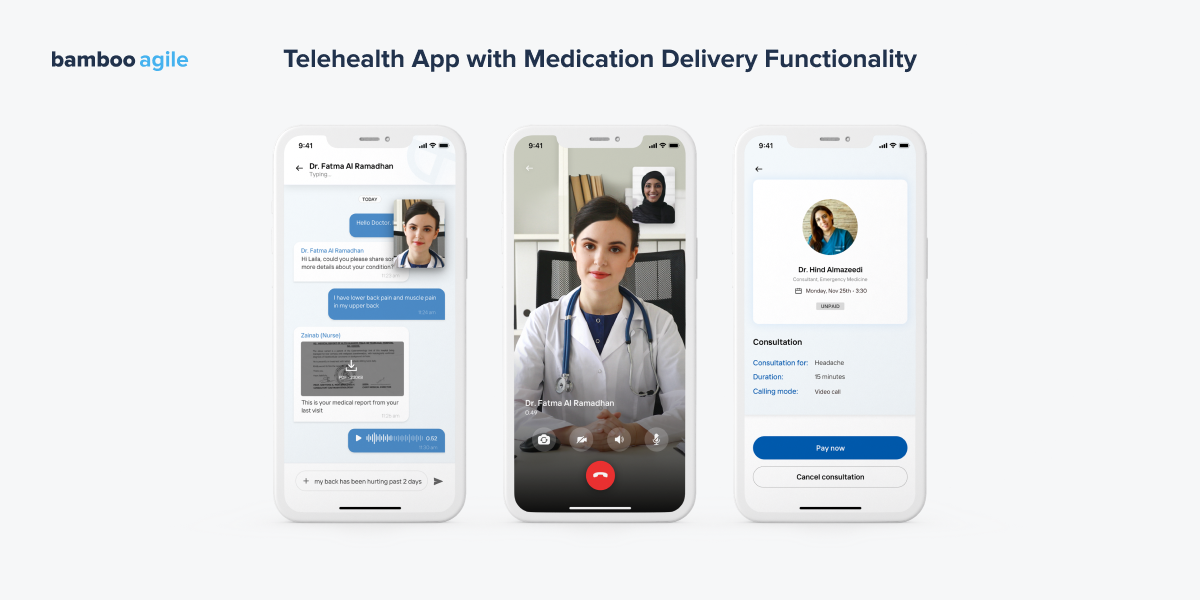
Bamboo Agile has developed a HIPAA-compliant telehealth platform offering easy access to primary and preventive care, chronic disease management, mental health, and other healthcare services.
One of the app’s key features is a convenient delivery service that connects pharmacies, medical labs, imaging centres, and patients to bring medications and lab test results straight to users’ doorsteps.
Read more about our expertise in healthcare solutions here.
Conclusion
The pharmaceutical industry has been witnessing a digital transformation driven by impressive market growth and increased investments in innovative digital solutions despite some persisting challenges regarding lacking data sources, talent pools, and adoption rates.
The sector’s commitment to digitalization is evident through the emergence of trends like digital companion apps, predictive modeling, trial & research management systems, and many other technologies spearheaded by some of the biggest pharmaceutical companies in the world.
Bamboo Agile is a trusted partner of healthcare and pharmaceutical companies across the globe. Contact us for a free consultation with our specialists.